Search engines have evolved significantly. Earlier, websites could rank by targeting individual keywords. Today, Google evaluates how well a website covers an entire topic.
This makes topical authority important. Websites need comprehensive, connected, and useful content to demonstrate expertise. Strong topical authority can help pages rank for related searches and attract consistent organic traffic.
AI, semantic search, and Google AI Overviews have made this even more important. Search systems now understand topics, entities, and user intent. A GEO expert also uses these relationships to improve how content is discovered, understood, and surfaced by AI search systems.
What Is Topical Authority?
Topical authority is the level of expertise and trust a website demonstrates on a specific subject. It is built by publishing comprehensive, accurate, and interconnected content that answers users’ questions and covers a topic from multiple angles.Instead of evaluating a single page in isolation, Google analyzes how your entire website addresses a subject. Therefore, websites that consistently publish valuable content around one niche are more likely to be recognized as authoritative sources.
For example, imagine two websites publishing an article about technical SEO. One website has only a single article on the topic. The other has dozens of related articles covering website crawling, indexing, XML sitemaps, schema markup, Core Web Vitals, canonical tags, robots.txt, and internal linking. Although both pages may target the same keyword, the second website demonstrates much stronger topical authority because it covers the subject in depth.
Topical authority is not a single ranking factor. Instead, it develops through the combined impact of high-quality content, semantic relevance, strong internal linking, topical coverage, user satisfaction, and consistent publishing. As search engines become better at understanding context and relationships between topics, building topical authority has become one of the most effective long-term SEO strategies.
Fundamentals of Topical Authority
Understanding the fundamentals helps you build topical authority more effectively. Rather than focusing only on keywords, modern SEO emphasizes expertise, relevance, and comprehensive topic coverage.
Cover Topics, Not Just Keywords
Traditional SEO focused on ranking individual pages for specific keywords. However, modern SEO focuses on covering an entire topic. A website should answer both primary and related questions to satisfy different search intents.
Build Content Around User Intent
Every piece of content should solve a user’s problem. Therefore, understand what users want before creating content. Informational, navigational, commercial, and transactional intent all require different approaches.
Publish Comprehensive Content
A single article rarely establishes authority. Instead, create supporting articles that explore related concepts, advanced topics, practical examples, and common questions. Together, these pages demonstrate expertise across the subject.
Connect Content Through Internal Links
Internal linking helps search engines understand the relationship between pages. It also distributes authority across your website while guiding users to relevant information. As a result, both crawlability and user experience improve.
Demonstrate Expertise and Trust
Google prioritizes content that reflects real expertise. Therefore, publish accurate information, cite credible sources where appropriate, keep articles updated, and showcase author experience. These practices strengthen your website’s credibility over time.
Focus on Long-Term Growth
Topical authority is not built overnight. It develops gradually as your website consistently publishes valuable content, updates existing pages, expands topic coverage, and improves overall content quality. Consequently, your website becomes a trusted resource for both users and search engines.
Topical Authority vs. Domain Authority
Many people confuse topical authority with domain authority. Although both relate to SEO performance, they measure different aspects of a website. Understanding the difference helps you build a more effective SEO strategy.Domain authority reflects the overall strength of a website based on factors such as backlinks, domain age, and overall reputation. In contrast, topical authority focuses on how well a website covers a specific subject through high-quality, interconnected content.As Google continues to prioritize expertise and relevance, topical authority has become increasingly important for earning sustainable organic rankings.
What Is Domain Authority?
Domain authority is a metric developed by third-party SEO tools to estimate how likely a website is to rank in search results. It is primarily influenced by the quality and quantity of backlinks pointing to the domain.A website with a strong backlink profile often receives a higher domain authority score. However, this score is not a Google ranking factor. Instead, it serves as a comparative metric used by SEO professionals.
Generally, domain authority is influenced by:
- High-quality backlinks
- Referring domains
- Domain age
- Overall website reputation
- Link profile quality
While a strong domain authority can help new pages gain visibility more quickly, it does not guarantee high rankings for every topic.By consistently publishing valuable content around a single niche, your website demonstrates expertise that search engines can recognize and reward.
Topical Authority vs. Domain Authority
| Feature | Topical Authority | Domain Authority |
| Focus | Expertise in a specific topic | Overall website strength |
| Based On | Content quality, topical coverage, internal linking, relevance | Backlinks, referring domains, website reputation |
| Scope | Individual topics or niches | Entire website |
| Google Metric | No | No |
| Main Purpose | Demonstrates subject expertise | Estimates overall ranking potential |
| Long-Term Strategy | Build comprehensive topic clusters | Earn high-quality backlinks |
Which Is More Important for Modern SEO?
Both are valuable, but they serve different purposes.A website with high domain authority may rank quickly because it has a strong backlink profile. However, if its content lacks depth or fails to meet user intent, rankings may not last.On the other hand, a website with moderate domain authority can achieve excellent rankings by building strong topical authority. When users consistently find helpful and comprehensive content, search engines gain greater confidence in the website’s expertise.Therefore, the most successful SEO strategy combines both. Build high-quality backlinks to strengthen your website while creating comprehensive content clusters that establish topical authority.
Can a New Website Build Topical Authority?
Yes. In fact, topical authority is one of the best ways for new websites to compete with larger competitors. Instead of publishing articles on unrelated topics, focus on one niche and create comprehensive content around it. Cover beginner, intermediate, and advanced topics while answering common questions and addressing different search intents.
For example, if your niche is digital marketing, you could publish content on:
- SEO fundamentals
- On-page SEO
- Technical SEO
- Keyword research
- Content marketing
- Link building
- Google Search Console
- Google Analytics 4
- Local SEO
- AI in SEO
As your content library grows and pages are connected through strategic internal linking, your website gradually becomes a trusted resource within that niche. Over time, this strengthens your topical authority and improves your ability to rank for competitive keywords.
SEO Benefits of Topical Authority
Building topical authority is one of the most effective long-term SEO strategies. Instead of relying on a few high-ranking pages, it helps your entire website become a trusted resource on a specific subject. As a result, search engines gain greater confidence in your content, leading to better visibility and sustainable organic growth.Let’s explore the key SEO benefits of topical authority.
Higher Search Engine Rankings
Google aims to provide users with the most relevant and trustworthy information. Therefore, websites that cover a topic comprehensively are more likely to rank higher than those with only a few isolated articles.When your content demonstrates expertise across a subject, Google understands that your website can answer a wide range of user queries. Consequently, multiple pages begin ranking for related keywords.
Better Topical Relevance
Topical authority strengthens the relationship between your content and its subject. Instead of optimizing individual pages in isolation, you create an interconnected network of articles that reinforce one another.For example, an SEO website with articles on keyword research, technical SEO, semantic SEO, and internal linking sends stronger topical signals than a website with only one SEO guide.As topical relevance improves, search engines better understand your website’s expertise.
Increased Organic Traffic
A website with topical authority can rank for hundreds or even thousands of related keywords. Consequently, organic traffic grows steadily over time.
Rather than depending on one high-volume keyword, your content attracts visitors through:
- Long-tail keywords
- Related search queries
- Question-based searches
- Semantic keywords
- Voice search queries
This diversified keyword coverage creates a more stable and sustainable source of organic traffic.
Improved Internal Linking Structure
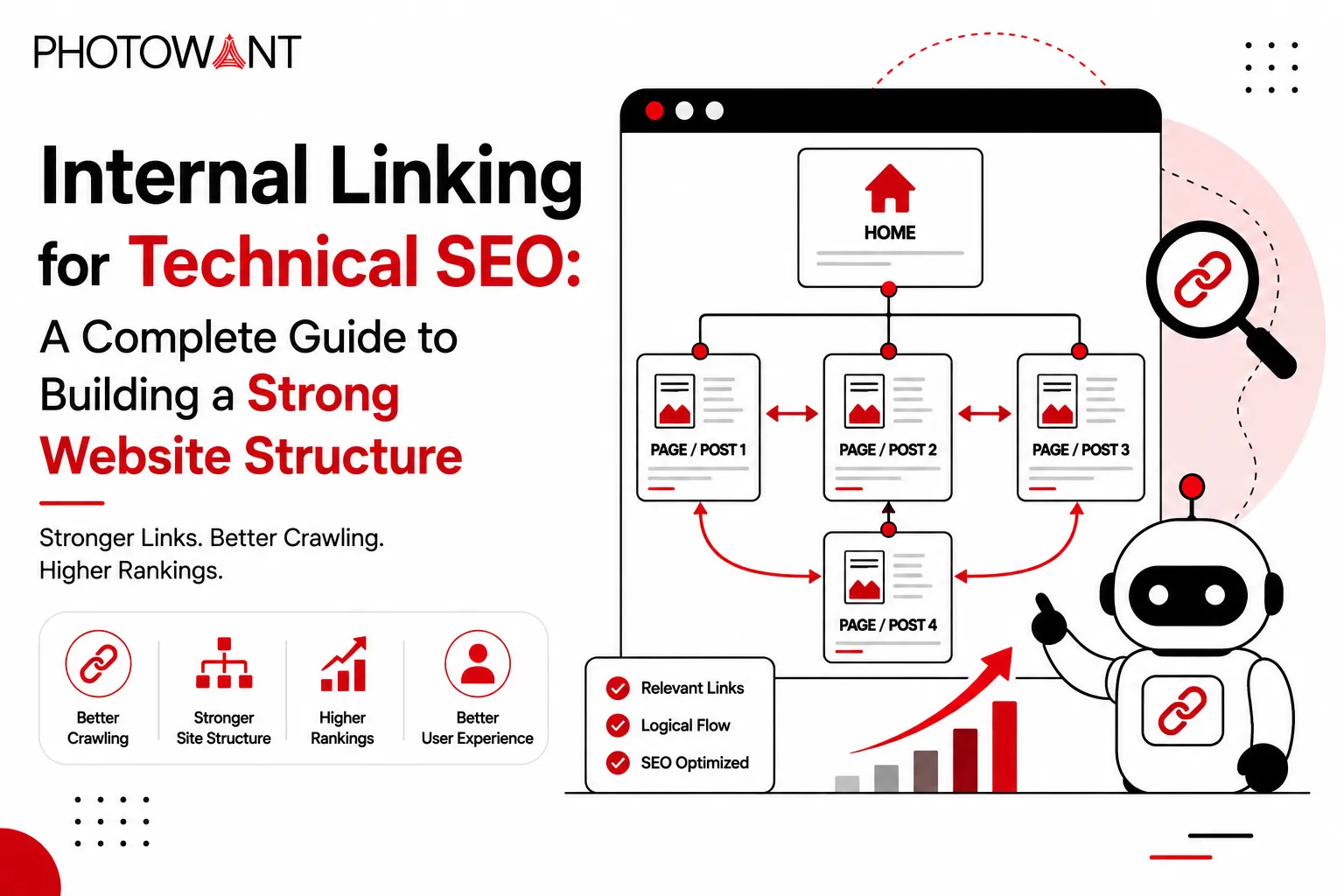
Topical authority relies on well-connected content. Every supporting article links to related pages, helping users discover additional information while guiding search engine crawlers through your website.
A strong internal linking structure provides several benefits:
- Improves crawlability
- Distributes page authority
- Strengthens topic relationships
- Reduces orphan pages
- Increases user engagement
As a result, both user experience and SEO performance improve.
Stronger E-E-A-T Signals
Google evaluates content based on Experience, Expertise, Authoritativeness, and Trustworthiness (E-E-A-T). Websites that consistently publish accurate, helpful, and well-organized content naturally strengthen these quality signals.Topical authority supports E-E-A-T by demonstrating that your website has extensive knowledge of a subject rather than superficial coverage.Additionally, regularly updating content, citing reliable sources, and showcasing author expertise further improve credibility.
Faster Content Discovery and Indexing
Search engines crawl authoritative websites more efficiently because they understand the relationships between pages.When new content is published within an established topic cluster, Google can quickly identify its context through internal links and related content. As a result, new pages may be discovered and indexed faster.
Better User Experience
Visitors often arrive with one question but continue exploring when they find relevant supporting content. Topic clusters make this easy by connecting related articles through meaningful internal links.
This improves important user engagement signals, such as:
- Longer session duration
- More page views
- Lower bounce rate
- Higher user satisfaction
When users find comprehensive answers in one place, they are more likely to trust your website and return in the future.
Greater Visibility in AI-Powered Search
Modern search engines use artificial intelligence to understand topics instead of matching exact keywords. AI systems evaluate context, relationships between concepts, and overall subject expertise.
Websites with strong topical authority are more likely to appear in:
- AI Overviews
- Featured Snippets
- People Also Ask results
- Voice search responses
- Semantic search results
Therefore, building topical authority prepares your website for the future of AI-driven search.
Long-Term SEO Growth
Many SEO tactics provide only short-term improvements. In contrast, topical authority creates lasting value because every new article strengthens your existing content ecosystem.As your website expands its topical coverage, search engines gain increasing confidence in your expertise. Consequently, rankings become more stable, organic traffic grows consistently, and your website develops a competitive advantage that is difficult for others to replicate.
Building Topical Authority
Building topical authority requires more than publishing random blog posts. Instead, it involves creating a structured content strategy that thoroughly covers a subject while making it easy for both users and search engines to navigate.The process begins with selecting a niche, identifying all related subtopics, and organizing them into a logical content hierarchy. Each article should support the others through strategic internal linking, creating a strong topical ecosystem.The following framework will help you build topical authority that delivers long-term SEO results.
Build a Topical Map
A topical map is a visual representation of all the topics and subtopics within your niche. It helps ensure complete topic coverage and identifies content gaps before you start writing.
A well-structured topical map should include:
- Main topic
- Categories
- Subtopics
- Supporting questions
- Related entities
- Search intent
- Internal linking opportunities
By following a topical map, you can publish content in a logical order while steadily expanding your authority.
Strengthen Internal Linking
Internal linking connects related pages across your website. It helps search engines understand how your content is organized and allows users to discover additional information.
A strong internal linking strategy should:
- Link pillar pages to cluster pages.
- Link cluster pages back to the pillar page.
- Connect related cluster pages.
- Use descriptive anchor text.
- Avoid orphan pages.
As your content grows, internal links distribute authority throughout your website and strengthen topical relationships.
Content Planning
Creating quality content consistently is essential for building topical authority. Every article should contribute to your overall topic rather than exist as an isolated page.A well-planned content strategy ensures comprehensive coverage, satisfies different search intents, and supports long-term SEO growth.
Start with Keyword Research
Keyword research helps identify what your audience is searching for. However, modern SEO focuses on finding related topics rather than targeting individual keywords alone.
Look for:
- Primary keywords
- Secondary keywords
- Long-tail keywords
- Question-based keywords
- Semantic keywords
- Related searches
This approach helps you build a comprehensive content strategy around a single topic.
Understand Search Intent
Every keyword represents a specific user intent. Before writing, determine whether users want to learn, compare, purchase, or solve a problem.
The four primary search intents are:
- Informational
- Navigational
- Commercial
- Transactional
Creating content that matches user intent improves both rankings and engagement.
Cover the Topic Completely
One article cannot answer every question. Therefore, divide large topics into multiple supporting articles that collectively provide complete coverage.
For example, instead of writing only one article about SEO, publish separate guides on:
- Keyword Research
- On-Page SEO
- Technical SEO
- Link Building
- Local SEO
- Content Marketing
- Semantic SEO
- Google Search Console
This comprehensive approach demonstrates expertise and strengthens topical authority.
Create a Content Calendar
Consistency is critical. A content calendar helps organize publishing schedules and ensures continuous topic expansion.
Your content calendar should include:
- Target keyword
- Search intent
- Content type
- Publishing date
- Internal linking plan
- Update schedule
Publishing consistently signals that your website remains active and authoritative.
Update Existing Content
Topical authority is not built only through new content. Existing articles should also be reviewed and updated regularly.
Content updates may include:
- Adding new information
- Improving examples
- Refreshing statistics
- Expanding sections
- Fixing outdated links
- Improving internal linking
Regular updates keep your content relevant and improve long-term rankings.
Technical Optimization
Even the best content needs a strong technical foundation. Technical SEO helps search engines crawl, understand, and index your website efficiently.Without proper technical optimization, valuable content may struggle to achieve its full ranking potential.
Improve Crawlability and Indexing
Search engines must be able to discover and access your pages.
To improve crawlability:
- Submit an XML sitemap.
- Optimize your robots.txt file.
- Fix broken links.
- Eliminate crawl errors.
- Maintain a clear website structure.
These practices help search engines navigate your website more effectively.
Use Schema Markup
Schema markup provides structured data that helps search engines understand your content.
Depending on your content, you can implement:
- Article Schema
- FAQ Schema
- Breadcrumb Schema
- Organization Schema
- Author Schema
Schema can improve search visibility and increase eligibility for rich results.
Optimize URL Structure
A clean URL structure improves both usability and SEO.
Best practices include:
- Keep URLs short.
- Use descriptive words.
- Include the primary keyword naturally.
- Avoid unnecessary parameters.
- Maintain consistent formatting.
Simple URLs are easier for users to read and search engines to understand.
Improve Core Web Vitals
Page experience remains an important part of SEO.
Focus on:
- Fast page loading
- Responsive design
- Stable visual layout
- Smooth user interactions
A faster website improves user satisfaction and supports better search performance.
Maintain a Logical Site Architecture
Your website should follow a clear hierarchy so users and search engines can easily navigate between related topics.A good structure looks like this:
Homepage → Category → Pillar Page → Cluster Page → Supporting Content
This logical organization strengthens topical relationships and makes content easier to discover.
How to Measure Topical Authority
Building topical authority is a long-term process, but measuring its progress is equally important. By tracking the right SEO metrics, you can understand whether your content strategy is improving your website’s expertise, visibility, and search performance.There is no single metric called Topical Authority Score in Google. Instead, you evaluate topical authority by analyzing several key performance indicators (KPIs) that reflect your website’s growth within a specific subject.The following metrics help you measure the effectiveness of your topical authority strategy.
Keyword Rankings
One of the easiest ways to measure topical authority is by monitoring keyword rankings.As your website publishes more high-quality content around a topic, you should notice an increase in rankings for:
- Primary keywords
- Secondary keywords
- Long-tail keywords
- Semantic keywords
- Question-based queries
Instead of tracking only one keyword, monitor the overall growth of related keywords across your topic cluster.
What to Measure
- Number of ranking keywords
- Top 3 keyword rankings
- Top 10 keyword rankings
- Ranking improvements over time
- New keyword opportunities
Organic Traffic Growth
A strong topical authority strategy should increase organic traffic consistently.As more pages rank for related searches, your website attracts visitors from a wider range of keywords instead of depending on a few high-volume terms.
Monitor:
- Total organic traffic
- Topic-specific traffic
- Landing page performance
- New user growth
- Returning visitors
Steady traffic growth often indicates that search engines trust your content more.
Topical Visibility
Topical visibility measures how well your website appears for searches related to a specific topic.For example, if your niche is SEO, you should gradually rank for searches related to:
- On-Page SEO
- Technical SEO
- Keyword Research
- Semantic SEO
- E-E-A-T
- Schema Markup
- Google Search Console
The broader your visibility across related topics, the stronger your topical authority becomes.
Indexed Pages
Search engines can only rank pages that are indexed.
As you publish more quality content, regularly check whether your articles are being indexed successfully.
Monitor:
- Total indexed pages
- Newly indexed articles
- Pages excluded from indexing
- Crawl errors
- Duplicate content issues
A growing number of properly indexed pages usually indicates a healthy content strategy.
Internal Linking Performance
Internal links strengthen relationships between your content and help distribute authority throughout your website.Evaluate your internal linking strategy by checking:
- Number of internal links
- Orphan pages
- Links pointing to pillar pages
- Links between cluster articles
- Anchor text relevance
Well-connected content makes it easier for both users and search engines to explore your website.
Click-Through Rate (CTR)
CTR measures how often users click your page after seeing it in search results.A higher CTR suggests that your title tags and meta descriptions are relevant and compelling.
Track:
- Average CTR
- High-performing pages
- Low CTR pages
- Title optimization opportunities
Improving CTR can increase organic traffic even without higher rankings.
User Engagement Metrics
Search engines aim to provide content that satisfies users. Therefore, engagement metrics help indicate whether your content meets user expectations.Monitor metrics such as:
- Average engagement time
- Pages per session
- Bounce rate
- Scroll depth
- User interactions
Strong engagement often reflects valuable and comprehensive content.
Backlink Growth
Although topical authority focuses primarily on content, backlinks still play an important supporting role.When your content becomes a trusted resource, other websites are more likely to reference and link to it naturally.
Track:
- Total backlinks
- Referring domains
- Link quality
- Natural backlink growth
- Links to pillar pages
High-quality backlinks reinforce your website’s credibility and authority.
Google Search Console Performance
Google Search Console provides valuable insights into your website’s search performance.
Regularly review:
- Search impressions
- Total clicks
- Average position
- Indexed pages
- Search queries
- Page performance
- Coverage reports
This data helps identify content gaps, ranking opportunities, and technical issues affecting your topical authority.
Signs Your Topical Authority Is Growing
Your strategy is moving in the right direction if you notice:
- More keywords ranking in the top 10.
- Consistent growth in organic traffic.
- Faster indexing of new content.
- Improved internal linking across topic clusters.
- Higher click-through rates.
- Increased user engagement.
- More high-quality backlinks.
- Greater visibility for related search queries.
- Stronger performance across your entire content cluster.
These indicators show that search engines increasingly recognize your website as an authoritative source within your niche.
Conclusion
Topical authority has become one of the most important concepts in modern SEO. As search engines continue to evolve with AI, semantic search, and natural language understanding, simply targeting individual keywords is no longer enough. Websites must demonstrate expertise by covering topics comprehensively and providing genuine value to users.Building topical authority requires a strategic approach. Start by choosing a focused niche, creating topic clusters, publishing high-quality content, and connecting related pages through effective internal linking. At the same time, maintain a technically optimized website and regularly update existing content to keep it accurate and relevant.
Remember that topical authority is not built overnight. It grows through consistency, expertise, and a commitment to answering users’ questions better than your competitors. While backlinks and technical SEO remain important, comprehensive topic coverage has become a key factor in establishing long-term search visibility.If you focus on creating helpful, well-structured, and interconnected content, your website will gradually become a trusted resource for both users and search engines. Over time, this trust translates into higher rankings, increased organic traffic, and sustainable SEO growth in an increasingly AI-driven search landscape.
