Creating high-quality content is only part of effective SEO. Your content also needs to address what people are actually looking for when they search. Search intent helps you understand the purpose behind a query and create content that fits the needs of the person searching.
A keyword alone doesn’t tell you what type of content to create. Two searches can target similar topics but require very different results. Understanding the intent behind a query helps you decide what information, format, and level of detail the searcher is likely expecting.
This guide explains what search intent means, the four commonly used intent types, how to identify intent from search results, and how to create content that better matches what searchers need.
What Is Search Intent?
Search intent is the reason why someone searches for something online. It tells us what a person wants to find when they type a search into Google. They may want to learn something, find a specific website, compare products, or buy something.
For example, someone searching for “what is SEO” wants to learn about SEO. A person searching for “best running shoes” is likely comparing different options before buying. Someone searching for “buy running shoes online” is ready to make a purchase. These searches may be about the same general topic, but the reason behind each search is different. Understanding this difference helps you create content that gives people the type of information or result they are looking for.
Why Search Intent Is Important for SEO
Understanding search intent helps you create the right content for the people you want to reach. A keyword may look useful during keyword research, but the content you create for it still needs to match what people are trying to find.
For example, someone searching for “how to clean white shoes” wants instructions. A long product page selling shoe cleaners may not give them the answer they need. In the same way, someone searching for “best running shoes” is likely comparing options, so a simple product page may not be enough.
Search intent can also guide your SEO content strategy. It helps you decide what type of page to create, what information to include, and how to organize the content. Once you understand what people want from a search, you can create a page that gives them the information or result they are looking for.
Types of Search Intent
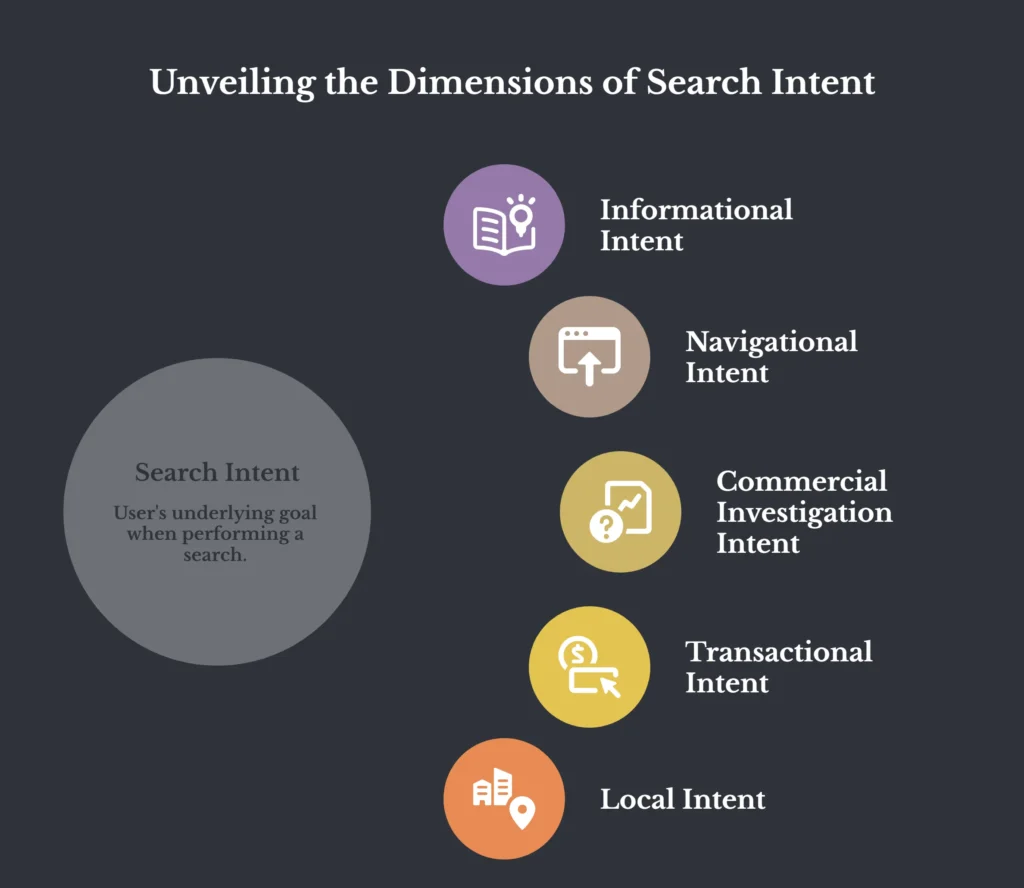
Not every search has the same purpose. Some users want to learn something, while others want to visit a specific website, compare products, or make a purchase. SEO professionals commonly group search intent into four main types: informational, navigational, commercial investigation, and transactional. Some SEO discussions also identify local intent, which focuses on searches for businesses, services, or places in a specific location.
Informational Intent
Informational intent means someone wants to learn something or find an answer. They are not mainly looking to buy a product or visit a specific website. They may want an explanation, instructions, facts, or tips.
Common words in these searches:
- what is
- how to
- why
- guide
- tutorial
- tips
Examples:
- what is digital marketing
- how to make cold coffee
- what is on-page SEO
- beginner yoga exercises
Navigational Intent
Navigational intent means someone already knows which website or page they want to find. They use Google to get there instead of entering the website address directly. These searches often include a brand, website, or service name.
Common words in these searches:
- official website
- login
- contact
- customer care
Examples:
- Facebook login
- YouTube Studio
- Amazon customer care
- Gmail sign in
Commercial Investigation Intent
Commercial investigation intent means someone is thinking about buying something but wants to research their options first. They may compare products, read reviews, check prices, or look for the best choice. They are interested in buying, but they have not decided what to buy yet.
Common words in these searches:
- best
- top
- review
- vs
- comparison
- alternatives
Examples:
- best smartphone under ₹30,000
- On-page SEO vs Off-page SEO
- best washing machine for home
- Nike Air Max review
The main difference is that commercial searches focus on choosing, while transactional searches focus on taking action.
Transactional Intent
Transactional intent means someone is ready to take a specific action. They may want to buy a product, book a service, download something, or sign up for an account. These searches often show that the person knows what action they want to take.
Common words in these searches:
- buy
- order
- book
- download
- subscribe
Examples:
- buy iPhone 16 online
- book train tickets
- download WhatsApp
- subscribe to Netflix
A single topic can have different search intents. For example, “what are running shoes?” is informational, “best running shoes” is commercial, “buy running shoes online” is transactional, and “running shoe stores near me” has local intent.
Local Intent
Local intent means someone is looking for a business, service, product, or place in a specific location. These searches often include a city, area, “near me,” or another location-based phrase.
Common words in these searches:
- near me
- nearby
- in [location]
- near [location]
- [service] + city
Examples:
- restaurants near me
- dentists in Kochi
- best cafes near Calicut
- clothing stores in Kerala
- hotels near Kochi airport
Local searches can have different goals. Someone searching for “restaurants near me” may want to visit a place, while “best restaurants in Kochi” may involve comparing options. The location is what makes these searches local.
How to Identify Search Intent for Any Keyword
You don’t always need advanced SEO tools to understand search intent. A simple way to start is to search your keyword on Google and study the results. The types of pages that appear can give you useful clues about what people are looking for and what type of content may best fit the search.
Analyze the Search Engine Results Page (SERP)
Start by searching your target keyword on Google. Look at the first few results and ask what type of content appears most often. You may see blog posts, guides, product pages, category pages, videos, or official websites.
These results can help you understand the likely search intent. For example, if most results are detailed guides, the search is likely informational. If product pages and shopping results dominate, people may be closer to making a purchase. If an official brand website appears at the top, the search may be navigational.
Also look at SERP features such as featured snippets, People Also Ask, videos, maps, or shopping results. These features can give you more clues about what people want to find.
Compare Top-Ranking Pages
Once you know what types of pages appear, open a few of the top results and compare them. Look at the page titles, headings, content format, and the questions they answer. Notice how much detail they provide and what information appears across several pages.
You don’t need to copy these pages. Instead, use them to understand what a useful result looks like for that search. You can then find gaps, add useful information, or present the topic in a clearer way.
How to Optimize Content for Search Intent
Once you understand the intent behind a keyword, the next step is to create content that fits it. This means choosing the right type of page, answering the questions people have, and giving them the information they came to find.
Match Your Content Format
The type of content you create should fit the search intent. Informational searches may need a guide, tutorial, or helpful article. Commercial searches may be better suited to comparison pages, reviews, or buying guides. Transactional searches often lead to product, service, booking, or sign-up pages.
Before creating a page, check what types of results already appear for your keyword. If most results are detailed guides, creating a short product page may not meet the needs of the searcher.
Answer the User’s Questions
Think about what someone would want to know after making the search. Answer the main question early, then cover the important questions that naturally follow it. For example, a guide targeting “how to choose running shoes” could explain shoe types, fit, comfort, and common mistakes.
You don’t need to answer every possible question. Focus on the information that helps the reader complete their search and make a decision.
Use Relevant Keywords Naturally
Use your main keyword and related terms where they make sense. Include them in places such as the title, headings, and body when they help explain the topic. You don’t need to repeat the same keyword again and again.
Good keyword research can help you find the words and phrases people use when searching. Use those terms to understand the topic, not to fill your page with keywords.
Keep Content Updated and Easy to Read
Search results can change over time, so check your important pages regularly. Update outdated information and review the current search results to make sure your content still matches what people are looking for.
Keep the page easy to read as well. Use clear headings, short paragraphs, simple language, and helpful examples. This makes it easier for readers to find the information they need.
Common Search Intent Mistakes to Avoid
Ignoring User Intent
Choosing a keyword based only on search volume can be a mistake. Before creating content, consider what people want from that search and whether your planned page matches their needs.
Focusing Only on Keywords
Adding a keyword to a page does not automatically make the content useful. Avoid repeating the same phrase just to make it appear more often. Use keywords naturally while focusing on the questions and information the reader needs.
Not Checking Your Content Over Time
Search results can change, and the type of content appearing for a keyword may change with them. Review important pages from time to time and compare them with the current search results. Update your content when the information, examples, or format no longer fit what people are looking for.
Conclusion
Search intent helps you understand what people are really looking for when they search online. Instead of choosing a keyword and writing about it, first look at the search results and understand the type of information people expect to find.
Use that understanding to choose the right content format, cover the important questions, and keep your content useful and easy to read. Before you create content for a keyword, search it first. The results can tell you a lot about what people expect to find.

