Every day, billions of searches are made on Google by people looking for information, products, services, and solutions to their problems. If your content doesn’t target the words and phrases they use, it’s much less likely to appear in search results. That’s why learning how to do keyword research is one of the most important skills in SEO. It helps you understand your audience, discover what they are searching for, and create content that meets their needs.
Keyword research is more than simply finding popular search terms. It helps you identify the topics your audience cares about, understand the intent behind their searches, and prioritize keywords that can bring relevant traffic to your website. Whether you’re a beginner, blogger, digital marketing student, website owner, or business owner, keyword research provides the foundation for a successful SEO and content strategy.
In this guide, you’ll learn what keyword research is, why it matters, the different types of keywords, the key metrics you should analyze, and how to do keyword research step by step using free tools. By the end, you’ll have a clear process for finding the right keywords and creating content that has a better chance of ranking in search engines.
What Is Keyword Research?
Keyword research is the process of finding and analyzing the words and phrases people use on search engines like Google. These search terms, known as keywords, help you understand what your audience is searching for so you can create content that matches their needs and search intent.
Instead of guessing what to write about, keyword research uses real search data to identify topics people are interested in. For example, if you offer Google Ads management, you may discover related searches like PPC management or Google Ads campaign services, helping you create more relevant content.
Keyword research also helps you understand search intent, evaluate keyword competition, and identify opportunities to reach the right audience. Whether you’re creating a blog post or optimizing a service page, it forms the foundation of an effective SEO strategy.
Why Keyword Research Is Important
Keyword research helps you create content based on what people are actually searching for. By identifying relevant keywords, you can attract the right audience instead of relying on assumptions or choosing topics at random.
It also helps you target keywords that match your goals. For example, while digital marketing is highly competitive, a more specific keyword like email marketing for small businesses may be easier to rank for and attract more relevant visitors.
In addition, keyword research helps you understand search intent, making it easier to create content that meets user expectations. This improves your chances of ranking higher in search results and driving meaningful organic traffic to your website.
Understanding Search Intent
Search intent is the purpose behind a user’s search query. It explains why someone is searching and what they expect to find in the results. Understanding search intent helps you create content that matches user expectations, improving both your rankings and user experience.
There are four main types of search intent: informational, navigational, commercial, and transactional. For example, someone searching “what is Google Ads” wants to learn about the topic, while a user searching “best Google Ads agency” is comparing service providers. A search like “hire PPC expert” shows the user is ready to take action.
Before targeting any keyword, identify its search intent by analyzing the top-ranking results on Google. If your content matches what users are looking for, it has a much better chance of ranking and attracting the right audience.
Types of Keywords
Keywords can be grouped into different categories based on their length and the purpose behind a user’s search. Understanding these keyword types helps you choose the right keywords for your content and target users at different stages of their search journey.
Some keywords are broad and attract a large audience, while others are more specific and indicate a clear intent. By using a mix of keyword types, you can create content that reaches users who are researching a topic, comparing options, or ready to take action.
Let’s look at the main types of keywords used in SEO.
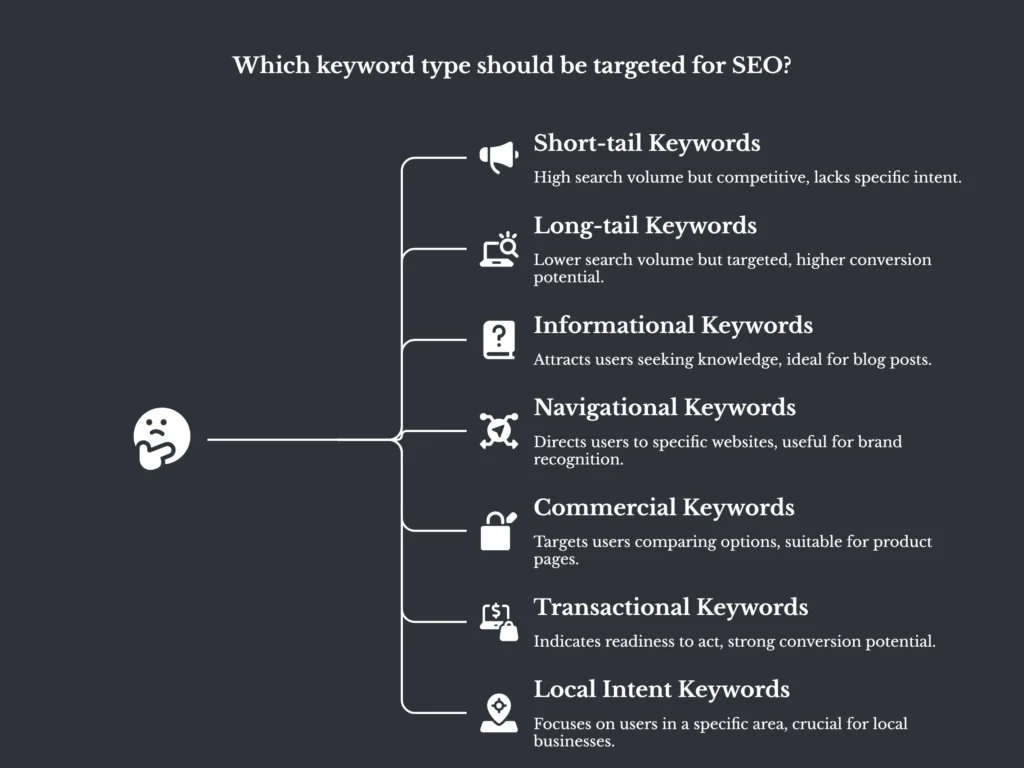
Short-tail Keywords
Short-tail keywords are broad search terms that usually contain one or two words. They often have a high search volume but are highly competitive because many websites target them. While they can drive significant traffic, they don’t clearly indicate what the user is looking for.
Long-tail Keywords
Long-tail keywords are more specific search phrases, usually containing three or more words. They typically have lower search volume but attract a more targeted audience with a clearer search intent. These keywords are often easier to rank for and can lead to higher conversion rates.
Informational Keywords
Informational keywords are used by people who want to learn about a topic or find answers to their questions. These keywords are commonly targeted through blog posts, guides, tutorials, and educational content.
Navigational Keywords
Navigational keywords are used when users are looking for a specific website, brand, or webpage. They already know where they want to go and use search engines to reach that destination quickly.
Commercial Keywords
Commercial keywords are used by people who are researching products or services before making a decision. Users often compare features, pricing, or providers before choosing the best option.
Transactional Keywords
Transactional keywords indicate that a user is ready to take action, such as making a purchase, booking a service, or submitting an inquiry. These keywords often have strong conversion potential and are commonly targeted on service and product pages.
Local Intent Keywords
Local intent keywords are used by people searching for products, services, or businesses in a specific geographic location. These keywords usually include a city, state, region, or phrases like “near me.” They are especially important for businesses that serve customers in a particular area.
Keyword Research Metrics
After finding keyword ideas, it’s important to evaluate them before creating content. Keyword metrics help you understand whether a keyword is worth targeting. One of the most useful metrics for beginners is monthly search volume, which shows how often a keyword is searched.
Monthly Search Volume
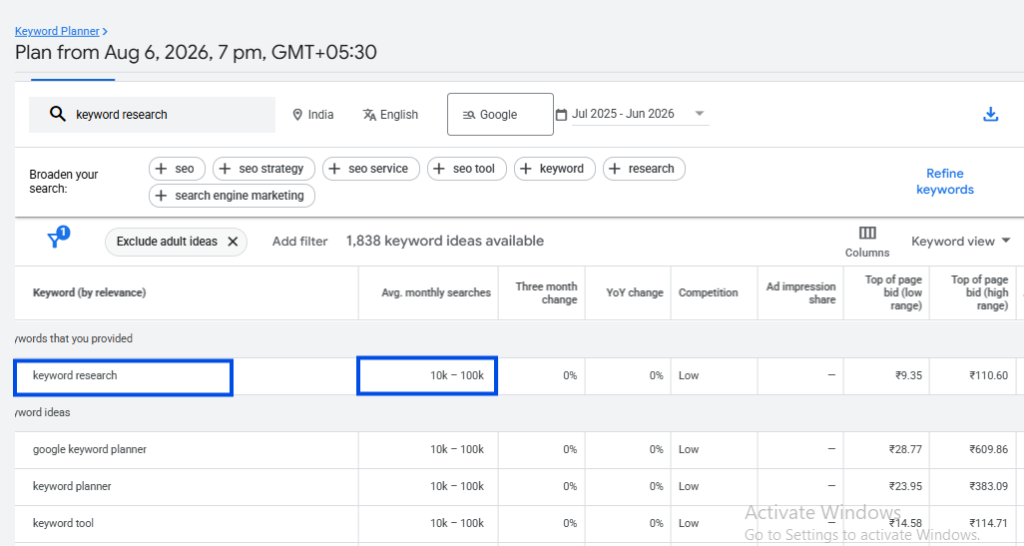
Monthly search volume is the average number of searches a keyword receives each month. In Google Keyword Planner, you can find this in the Avg. monthly searches column. While higher search volume may indicate greater traffic potential, always prioritize keywords that are relevant to your content and audience.
How to Do Keyword Research
Keyword research is a step-by-step process that helps you discover the right keywords before creating content. Instead of choosing topics based on assumptions, you use search data to understand what your audience is looking for and identify opportunities to rank in search results.
Follow these six steps to perform effective keyword research.
Step 1: Identify Your Niche and Seed Keywords
Start by identifying your niche and the main topics related to your business, website, or industry. These broad topics become your seed keywords, which act as the foundation for your keyword research.
For example, if you offer digital marketing services, your seed keywords might include SEO, Google Ads, social media marketing, content marketing, and website development. These broad terms can then be expanded into more specific keyword ideas.
Step 2: Use Keyword Research Tools
Enter your seed keywords into a keyword research tool to discover related search terms and gather useful data. These tools help you generate keyword ideas, estimate search volume, and identify keyword difficulty.
Explore multiple keyword variations instead of selecting the first suggestion. Building a diverse keyword list gives you more opportunities to create relevant and valuable content.
Step 3: Analyze Search Intent
Once you have a list of keywords, determine the search intent behind each one. Search intent explains why users are searching for a keyword and what type of content they expect to find. Understanding this helps you create content that better matches their needs.
One of the easiest ways to identify search intent is by reviewing the top-ranking results on Google. If most results are blog posts, users are likely looking for information. If service pages or product pages dominate the results, the keyword has commercial or transactional intent.
Step 4: Check Search Volume and Keyword Difficulty
After identifying the search intent, evaluate the keyword’s search volume and difficulty. Search volume shows how often a keyword is searched, while keyword difficulty indicates how competitive it is to rank for that term.
Aim for keywords that offer a good balance between search demand and competition. This approach helps you focus on keywords that are both relevant and achievable for your website.
Step 5: Perform Competitor Keyword Analysis
Analyze the websites that rank for your target keywords to understand what they’re doing well. Review their page titles, headings, content structure, and the topics they cover to identify patterns and opportunities.
Competitor analysis helps you discover content gaps, uncover additional keyword ideas, and create content that provides more value than existing results.
Step 6: Select and Organize Your Keywords
The final step is to choose the keywords that best fit your content and organize them into a clear content plan. Select one primary keyword for your main topic and include relevant secondary keywords that naturally support it.
Grouping related keywords for blog posts, service pages, or landing pages helps prevent keyword overlap and creates a more organized SEO strategy as your website grows.
Free Keyword Research Tools
You don’t need paid SEO tools to perform effective keyword research. Several free tools can help you discover keyword ideas, analyze search demand, and build a solid keyword list.
Google Keyword Planner
Google Keyword Planner helps you find keyword ideas, view average monthly search volume, and understand keyword competition. It’s a great starting point for beginners.
Ahrefs Keyword Generator
Ahrefs Keyword Generator provides related keyword suggestions along with useful metrics like search volume and keyword difficulty. It’s ideal for discovering new keyword opportunities.
Ubersuggest
Ubersuggest offers keyword suggestions, search volume, SEO difficulty, and content ideas in a beginner-friendly interface, making it easy to start keyword research.
Keyword Tool.io
Keyword Tool.io generates keyword ideas using Google Autocomplete. It’s especially useful for finding long-tail keywords and expanding your keyword list.
Common Keyword Research Mistakes
Keyword research is one of the most important parts of SEO, but beginners often make mistakes that limit their results. Avoiding these common pitfalls can help you build a stronger keyword strategy and create content that performs better in search engines.
- Targeting only high-volume keywords: High search volume often means higher competition. Consider keywords that balance search demand with ranking potential.
- Ignoring search intent: Even a relevant keyword won’t perform well if your content doesn’t match what users are looking for.
- Overlooking long-tail keywords: Long-tail keywords may have lower search volume, but they often attract more targeted traffic and are easier to rank for.
- Relying on a single metric: Don’t choose keywords based only on search volume or keyword difficulty. Evaluate multiple metrics before making a decision.
- Skipping competitor analysis: Analyzing top-ranking pages helps you identify keyword opportunities and understand what type of content performs well.
- Not updating keyword research: Search trends and user behavior change over time. Review and refresh your keyword strategy regularly to keep your content relevant.
Conclusion
Keyword research is the foundation of every successful SEO strategy. It helps you understand what your audience is searching for, choose the right keywords, and create content that aligns with their search intent. By following a structured keyword research process, you can make smarter content decisions and improve your chances of ranking in search results.
Whether you’re a beginner, blogger, or business owner, mastering keyword research is a valuable skill that supports long-term SEO success. Start with the basics, use free keyword research tools, and refine your strategy as you gain experience. With consistent practice, you’ll be able to build content that attracts the right audience and drives sustainable organic traffic.

