Walk through any market in Kochi, and you’ll notice something interesting: you can often tell which spice shop, houseboat operator, or textile stall you’re looking at before you read a single word. A particular shade of green on a packet. The curve of a logo on a houseboat’s bow. A familiar tagline painted on a shopfront. That instant, wordless recognition isn’t an accident it’s a brand’s identity at work.
For Kerala’s growing community of entrepreneurs, MSME owners, tourism operators, and startups, this concept has quietly become one of the most valuable and most misunderstood tools for growth. As more businesses move online, compete for the same customers, and try to stand out in crowded, traditional markets, having a clear, deliberate sense of self is no longer a luxury reserved for large corporations. It’s a practical necessity.
This guide breaks down what the term actually means, why it matters specifically for businesses operating in Kerala, the core elements that make up a strong identity, and a practical framework you can use to start building one.
What Is Brand Identity?
At its core, it’s the unique combination of a business’s name, visuals, personality, and voice that shapes how it wants to be seen by customers. It includes everything from a logo and colour palette to the words a brand uses and the story it tells. Put simply: it’s what a business puts out into the world on purpose.
It’s easy to confuse this with brand image, but the two work in opposite directions. Identity is what a business intentionally projects the decisions made by the people behind it about how they want to be perceived. Image, on the other hand, is what actually lands in the minds of customers after they’ve interacted with the business. One comes from the brand; the other comes from the audience.
This distinction matters more than it might seem. A business can have a beautiful logo and a polished website, but if its customer service, product quality, or online reviews tell a different story, the two won’t match. For small and growing businesses, closing that gap making sure what you intend to communicate actually comes across is where the real work happens.
Why It Matters for Kerala Businesses
Standing out in crowded, traditional markets. Many of Kerala’s strongest industries spice exports, handloom and textiles, seafood, homestays are also some of its most crowded. Walk down a row of spice stalls or browse export listings for Kerala pepper and cardamom, and it’s easy to see how similar many of these businesses look and sound. In markets like these, a clear, distinct identity is often the single biggest differentiator between a business that gets remembered and one that blends into the background.
Building trust from a distance. For businesses that rely on trust from customers they’ll never meet in person a spice exporter shipping to a buyer overseas, or a homestay booked months in advance by a traveller who’s never set foot in Kerala a strong identity does a lot of quiet, important work. Consistency and professionalism signal reliability before a customer has any other way to judge it.
Supporting digital growth. As more Kerala MSMEs shift toward e-commerce, social media, and online bookings, the businesses that maintain a consistent look and voice across every channel website, Instagram, WhatsApp Business, packaging tend to be remembered and recommended more easily. Inconsistency, by contrast, makes even a good business feel less trustworthy online.
Attracting investment and talent. Kochi’s startup scene has grown quickly, and with that growth comes competition not just for customers, but for funding and skilled employees. A credible, well-articulated identity helps a young company signal seriousness to investors and gives potential hires a reason to believe in where the company is headed.
The Seven Key Elements
A strong brand isn’t just a logo. It’s built from several interconnected pieces, each doing a different job.
- Story. Every strong brand starts with a narrative where the business came from, who started it, and why. For many Kerala businesses, this material already exists: a spice trading family with three generations of history, a weaver who learned handloom techniques from a parent, a houseboat operator who grew up on the backwaters. The story usually doesn’t need inventing just telling well.
- Name. This is often the very first impression a customer forms. For businesses reaching audiences across Malayalam, English, and Hindi speakers and increasingly, international buyers a name that’s easy to pronounce and remember across languages carries real practical value, not just aesthetic appeal.
- Personality. This is what makes a business feel human rather than purely transactional. Is it warm and traditional, like a family-run ayurvedic wellness centre? Adventurous and rugged, like a backwater tour operator? Modern and efficient, like a Kochi-based tech startup? Defining this clearly helps every other decision visual, tone, even hiring fall into place more naturally.
- Tone of voice. How a business talks to customers matters as much as what it says. This includes decisions like formality versus casualness, and particularly relevant in Kerala how and when to use Malayalam alongside English. Striking a tone that feels natural to a local audience while staying clear to an international one is a genuine skill, and getting it right builds instant familiarity.
- The product or service itself. Customers judge a brand partly through what it actually delivers quality, consistency, and the values it represents. A spice exporter with organic certification, for instance, communicates part of its identity directly through the product, before a customer reads a word of marketing copy.
- Visual identity. This is the most visible layer: logo, colour palette, typography, packaging, and photography style. Colour carries cultural weight certain shades and motifs resonate more strongly with Kerala audiences and can be woven thoughtfully into the visuals rather than defaulting to generic, imported design trends.
- Sensory identity. For hospitality, food, and spice businesses especially, scent, texture, sound, and even the feel of packaging can be a powerful, often underused layer. A homestay that pairs its visuals with a signature welcome scent, or a spice brand whose packaging invites customers to smell the product before buying, creates a memory that visuals alone can’t.
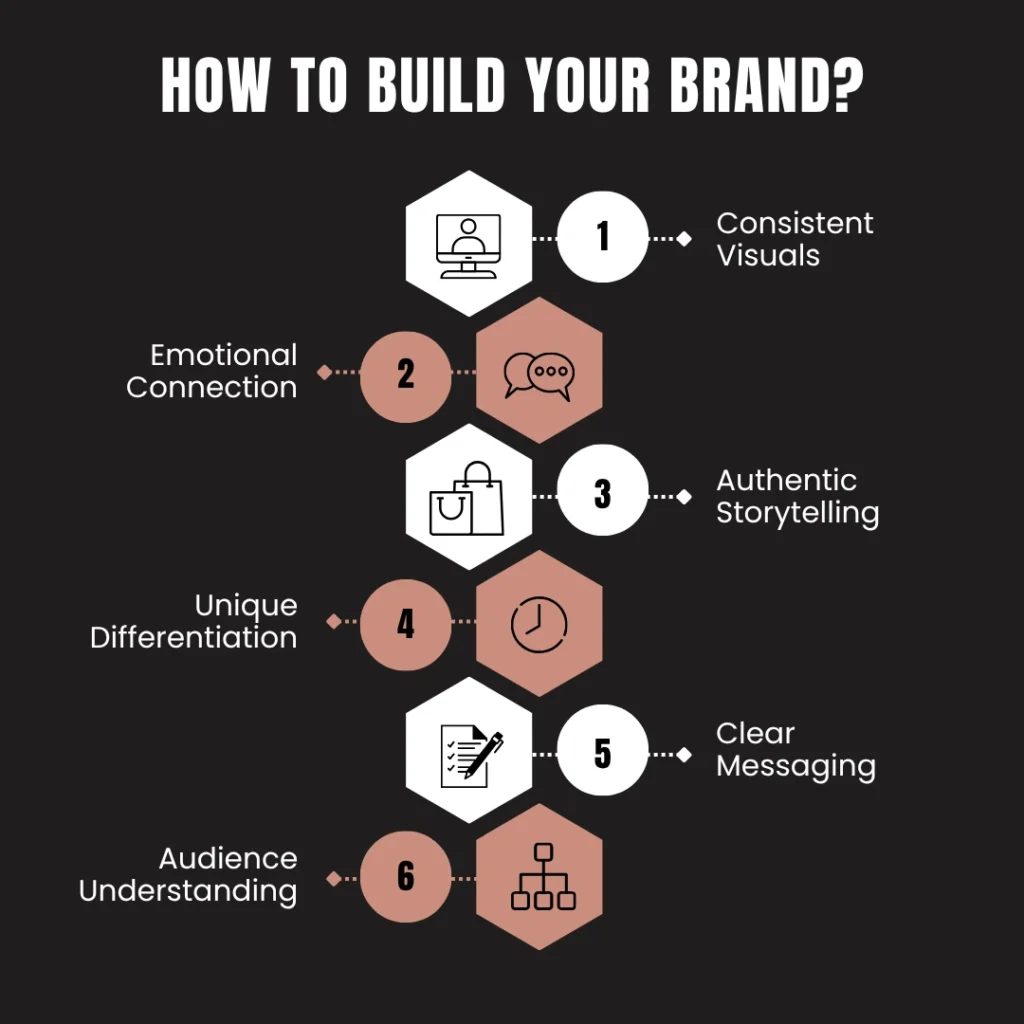
A Practical Framework for Building One
This doesn’t require a large budget or an in-house design team it requires a clear process.
- Define your core values and audience. Start by getting specific about who you serve and what you stand for. A vague sense of “quality products” isn’t enough; get precise about what your business genuinely believes in and who it’s genuinely for.
- Research your market and competitors. Look closely at how similar businesses in Kerala and beyond present themselves. The goal isn’t to imitate, but to spot the gaps where your business can carve out a distinct position.
- Design your visual and verbal expression. This is where values and research translate into tangible decisions: a logo, a colour palette, a tone of voice, and a tagline that all work together to express the same underlying idea.
- Maintain consistency across channels. It only works if it shows up the same way everywhere packaging, website, social media, and the in-person or on-site experience. Consistency is often what separates a memorable brand from a forgettable one.
- Evolve thoughtfully over time. Markets shift, audiences change, and something built five years ago may need refreshing. The businesses that handle this well evolve gradually and deliberately, staying rooted in their original values even as the visual or verbal expression updates.
Industry Examples in Kerala
Tourism and homestays offer some of the richest opportunities for sensory and visual expression the look of a welcome sign, the scent of a common area, the tone of a booking confirmation message can all reinforce the same feeling of place and hospitality.
Spice and argot-export businesses often have built-in stories rooted in heritage and generational knowledge, which paired with clean, modern packaging and clear certifications can resonate strongly with both local and international buyers.
Handloom and textile businesses sit at an interesting intersection of tradition and modern design, where an approach that respects craft heritage while presenting it through contemporary visual language can appeal to a wider, design-conscious audience without losing authenticity.
Kochi-based startups, meanwhile, tend to lean into personalities that feel youthful, fast-moving, and tech-forward often using minimal, confident visuals to signal innovation to both customers and potential investors.
Conclusion
A strong, deliberate identity gives a business something a good product alone can’t: a clear, consistent way of being recognized, trusted, and remembered. For Kerala’s entrepreneurs, MSMEs, tourism operators, and startups, building it on purpose rather than letting it form by accident is one of the most practical investments available for standing out in an increasingly competitive, increasingly digital marketplace.
Whether a business is just starting out or already established and looking to modernize, the same truth applies: this isn’t decoration. It’s the foundation that everything else marketing, customer trust, growth is built on top of.
For Kerala’s businesses, the opportunity is bigger than a logo refresh. It’s about being unmistakable in a crowded market, trustworthy to a customer thousands of miles away, and appealing to the investors and talent shaping the state’s next wave of growth. Businesses that treat this as a deliberate, ongoing practice not a one-time design project are the ones that end up owning a distinct place in their customers’ minds.

