Every business wears two faces. One face is the one it chooses – the logo, the tagline, the promise it makes about who it is. The other face is the one the world hands back – the reputation, the first reaction people feel when your name comes up.
The first face is brand identity. The second is brand image. Marketers often use these terms interchangeably, and that habit quietly wrecks strategies: a company redesigns its logo and wonders why customer sentiment hasn’t moved at all.
This article separates the two clearly, then proves the difference with a brand most Kerala households already trust without thinking twice – before we bring in Apple or Coca-Cola.
Brand Identity vs Brand Image: Key Differences at a Glance
Ask one question to tell them apart fast: who makes the decision? A company builds its brand identity on purpose. The public decides brand image on its own.
| Attribute | Brand Identity | Brand Image |
|---|---|---|
| Definition | The company’s intentional self-portrait – what a business decides to be | Real-world public perception – what people actually believe |
| Nature | Active, stable – logo, colour palette, typography, tone of voice, mission and values | Passive, dynamic – intangible, emotional, built from associations and reputation |
| Creation | Set by internal stakeholders: leadership, design teams, brand guidelines | Formed by external society: customer experiences, word-of-mouth, reviews |
| Focus | The firm’s reality – what it says about itself | Consumer perception – what people say about it |
| Timeline | Set first, as a foundation | Built over time, through repeated contact |
| Control | Fully managed by the company | Only partially influenced – the audience has the final word |
| Assessed by | Brand audits, guideline-adherence checks | Surveys, sentiment analysis, Net Promoter Score (NPS) |
That last row carries the real weight. A company can measure whether its logo follows the guidelines correctly. It cannot order a customer to trust it.
A logo sits inside identity as just one visual asset, not the whole self-portrait. Branding is the umbrella activity – the ongoing work of shaping identity so it can eventually influence image. Image is the one piece the company never fully authors.
Timeline explains why the confusion happens so often. A company sets its identity on day one, before a single customer has formed an opinion. Image only builds afterward, through repeated contact, which means a brand-new company can have a polished identity and almost no image at all.
AVT Tea: A Kerala Example of Identity Meeting Image
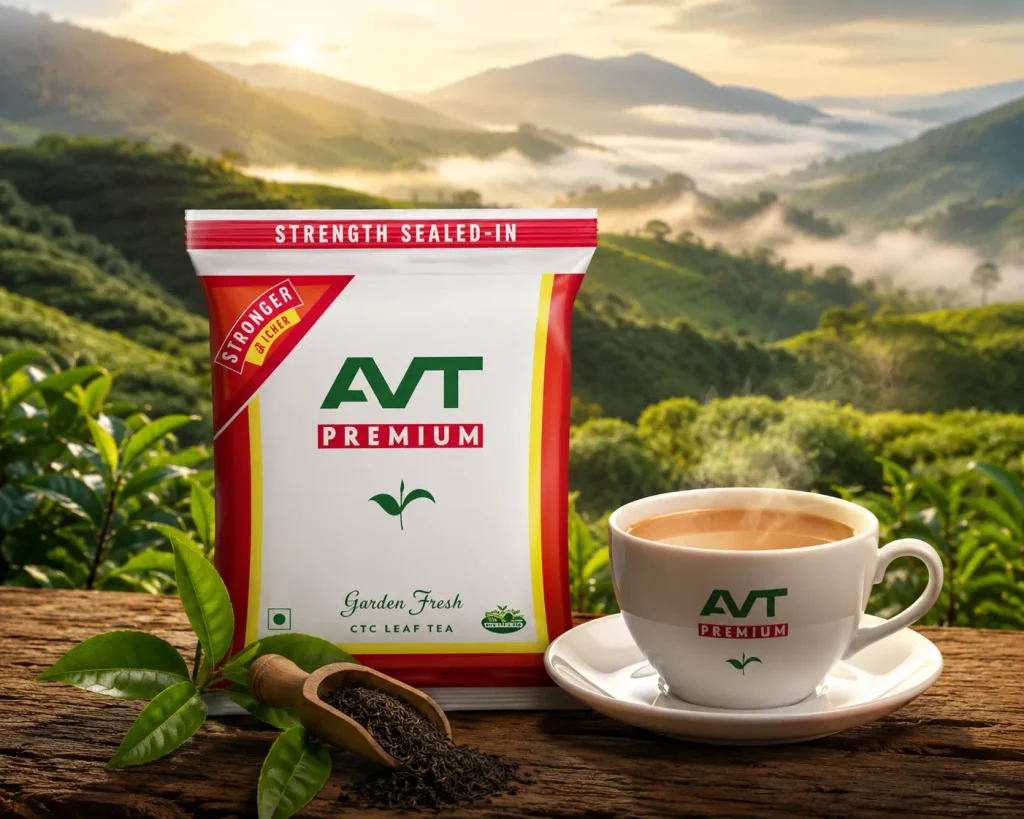
Here’s a small moment that explains the whole idea better than any case study can. My mother calls out from the kitchen: “Poyi chaya podi vaangi vaa” – go buy tea powder. She names no brand at all.
I already know which packet to pick up before I’ve even left the house. That packet is AVT. Nobody explained AVT’s brand strategy to me; the brand simply became the default answer to an unbranded request. That’s brand recall doing its quiet work, and that reflex is brand image in its purest form.
AVT’s Brand Identity – Heritage and Consistency as a Promise
This is brand identity built on purpose. It traces back to 1925, when Alfred Vedam Thomas started a tea plantation at Pasuparai — becoming the first Indian to independently own a plantation company under British-era rules. That heritage still anchors the identity today, in AVT’s case.
Brand identity here shows up as market leadership: AVT’s Consumer Products Division now leads branded packaged tea across much of South India, with a strong footprint in Kerala and Tamil Nadu. Its flagship, AVT Premium, ranks among India’s largest dust-tea brands, though exact market-share figures shift and need verification before publishing. The advertising, created by FCB Ulka Bangalore, builds identity around one steady idea: taste consistency passed down through generations.
Red packaging, Malayalam messaging, and a generational-trust narrative are all deliberate identity choices — none of it accidental. Every brand identity, old or new, rests on the same three layers: values at the centre, a visual system around it, and a verbal tone carrying both consistently.
AVT’s Brand Image – What Kerala Households Actually Believe
Identity is the pitch. Brand image is whether that pitch survived contact with real life. Here, it did — the reputation built around “എന്നും കടുപ്പമേറിയ ചായ, ഒരേ ഗുണമേന്മയിൽ” (always strong tea, at the same quality) grew from decades of a cup tasting the same way every time.
Product quality, consistency at the point of use, and word-of-mouth built that image, not a single ad campaign. This is why brand image resists direct control. A brand audit checks whether packaging follows identity guidelines; only a sentiment survey or repeat-purchase pattern — the everyday signal of brand loyalty — reveals whether the image still holds.
Sentiment tracking exists because brand image lives outside company walls — in kitchens, in conversations between neighbours, in what a mother assumes when she asks for tea powder without naming a brand. No internal document can measure that; only the market can.
Why the Two Line Up – and What Could Break It
Brand identity and brand image reinforce each other here rather than pull apart. The promise of consistency matches the tea people keep buying without question. That alignment between identity and image is rarer than most brands assume, and it builds stronger positioning than any tagline could buy.
Even a strong regional leader faces pressure, though. Younger, more urban-skewing tea and beverage brands are chasing the same households this brand identity has held for generations. A brand image built over decades can still erode if daily experience stops matching the promise.
One Global Example: When the Gap Breaks Trust
McDonald’s shows the opposite pattern. For years, the brand’s identity promised speed, familiarity, and reliable quality across every location. Public perception drifted anyway, as customers raised persistent concerns about food quality and health, and the gap between promise and experience became the story itself.
McDonald’s didn’t need a full rebranding to fix this. It changed the daily experience – menu ingredients, service delivery standards, sourcing claims – and let public opinion catch up slowly. The lesson travels well beyond fast food: image rarely repairs through a single announcement.
Repair takes visible, repeated proof, not a press release. Customers update their beliefs the same way they formed them in the first place – through contact, not claims. That’s true whether the brand sells burgers in Chicago or tea powder in Thrissur.
How to Align Brand Identity and Brand Image – The 4D Loop
Alignment isn’t a one-time project. It runs as a continuous loop with four steps.
- Define — clarify the core identity foundation: mission, values, the promise you’re actually making.
- Design — translate that identity into reusable assets: visual system, tone of voice, messaging.
- Deliver — carry that identity through every point where a customer actually meets the brand.
- Diagnose — track outside perception through research, reviews, and sentiment, then feed it back into Define.
Practical Steps to Close the Identity–Image Gap
Small, repeatable habits close this gap faster than big campaigns do. Run brand audits against your own guidelines on a schedule, not just when something breaks. Train employees on the identity they represent, since image forms at every buyer touchpoint marketing never sees.
If your identity and image already feel out of sync, PhotoWant’s branding team can help rebuild the visual and messaging system from the ground up.
Monitor social sentiment as an early warning signal rather than an afterthought. Tighten service-delivery commitments so daily experience matches the promise. Keep messaging, packaging, and service consistent across every channel — that omnichannel consistency is what let AVT become recognisable without anyone saying its name.
Treat these steps as an ongoing checklist, not a one-time fix. Pair an identity question (“does every customer-facing asset still match our guidelines?”) with an image question (“does what people say match what we intended?”). Running both together keeps the gap visible before it turns into a crisis.
Why This Alignment Actually Matters
Aligned identity and image pay off in concrete ways. Customer trust compounds over time, and brand equity survives a rough quarter. Pricing power improves in B2B negotiations where reputation carries part of the pitch.
Marketing works harder too, once it stops fighting a perception problem underneath it. A campaign built on a promise the market already believes needs less convincing and less budget to land. That’s the quiet advantage alignment buys a brand over time.
AVT never had to convince my mother of anything directly. The alignment between promise and experience had already done that work, years before she ever asked me to go buy tea powder.
Key Takeaways
Brand identity is the story a company decides to tell. Brand image is the story the world tells back, shaped by real experience and largely outside the company’s control. Treating the two as interchangeable is how brands end up polishing a logo while their reputation quietly drifts elsewhere.
