A homestay owner in Munnar runs a Facebook ad during peak tourist season. Hundreds of people click it. But the ad sends them to the homestay’s general website homepage with a menu, a gallery, an “About Us” page, and no clear next step. Most visitors browse for a few seconds and leave without booking.
This happens across Kerala every day, in tourism, ecommerce, education, and export businesses alike. The problem isn’t the ad. It’s what happens after the click. A dedicated landing page built for that one offer and nothing else can turn the same traffic into real enquiries, bookings, and sales.
This guide explains what a landing page is, the main types you can use, what makes one convert, and how to get started with examples relevant to Kerala’s local business landscape.
What Is a Landing Page, and Why Does It Matter for Kerala Businesses?
A landing page is a standalone web page created for a single, specific goal such as capturing an enquiry, generating a booking, or driving a sale. Unlike a full website, it has minimal navigation and no distractions, so every visitor is guided toward one clear action.
This matters because a landing page is meant to be the destination for a marketing campaign: the page an ad, a WhatsApp broadcast, an Instagram promotion, or an email link should send people to, instead of a general homepage.
Kerala’s digital advertising activity has grown steadily across tourism, D2C ecommerce, coaching and education, and export-driven sectors like spices, coir, and seafood. As more local businesses invest in Google Ads and Meta ads, the page visitors land on after clicking has become just as important as the ad itself. A well-built landing page can be the difference between an ad that pays for itself and one that quietly drains a marketing budget.
Primary Types of Landing Pages (With Local Examples)
Not every landing page serves the same purpose. Choosing the right type depends on your business goal.
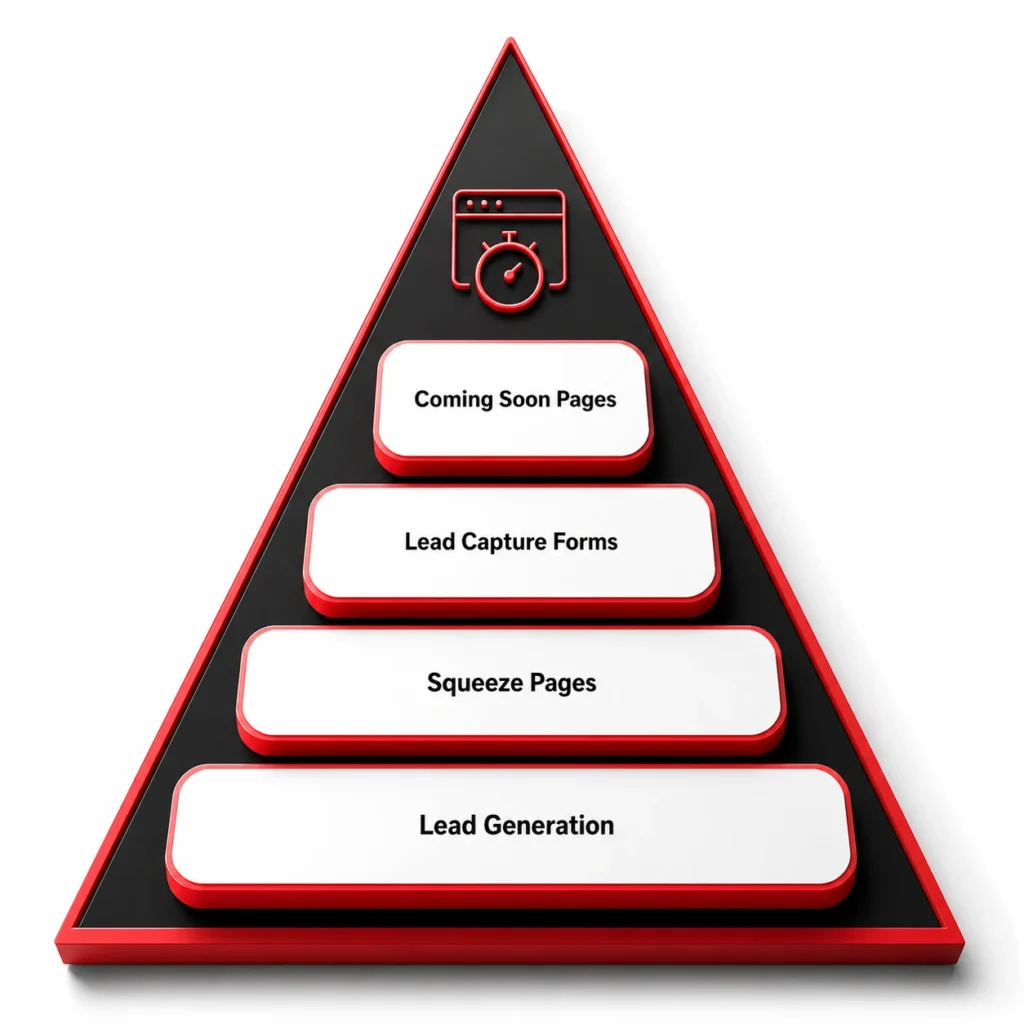
1. Lead Generation Pages These are designed to collect visitor information rather than close a sale immediately.
- Squeeze pages : a homestay or tour operator collecting names and phone numbers for enquiries
- Lead capture forms : used by coaching centers, real estate agents, or clinics to book consultations
- Coming soon pages : used to build interest ahead of a new store, product, or menu launch
2. Transactional / Click-Through Pages These are built to move visitors closer to a purchase.
- Ecommerce sales pages : for local D2C brands selling spices, handicrafts, textiles, or coir products online
- SaaS or subscription sign-up pages : increasingly relevant as Kerala’s startup ecosystem grows
- Click-through pages : used to warm up a visitor with information before sending them to checkout
3. Reference Pages and Smart Links Useful when a business is promoting multiple offers at once for example, a tourism operator running several package promotions through one central page that routes visitors to the right offer.
Essential Components of a High-Converting Landing Page
Regardless of the type, effective landing pages tend to share the same core elements:
- A clear, benefit-driven headline : visitors should understand the offer within seconds
- A prominent call-to-action (CTA) : one obvious next step, ideally available in both English and Malayalam for wider reach
- Social proof and testimonials : genuine reviews or client feedback build trust quickly, which matters especially in relationship-driven Kerala markets
- High-quality visuals : authentic photos of your product, service, or location generally perform better than generic stock imagery
- Trust signals : business registration details, MSME certification, or secure-payment badges reassure first-time visitors
- A short, optimized form : asking for only the information you truly need increases completion rates
Our trainer gives a knowledge about “above the fold” which means a visitor sees before scrolling , it has to do the job of a headline, a pitch, and a call-to-action all at once, because most visitors decide whether to stay in this zone. (Neeraj R Chandran , edoxi.com)
Optimization and Testing: Getting the Details Right
Building the page is only the first step. The businesses that get the most out of landing pages treat them as something to continuously refine:
- A/B testing : comparing two versions of a headline, image, or CTA to see which performs better
- Multivariate and total-experience testing : testing multiple elements together for more advanced optimization
- Message matching : making sure the language in your ad matches the headline on your landing page, so visitors don’t feel misled
- Design matching : keeping colors, fonts, and branding consistent from ad to page
- F-pattern layout : structuring content the way people naturally scan a page, with key information placed where the eye goes first
- Above-the-fold placement : putting your core offer and CTA where visitors see it without scrolling
- Mobile-responsive design : non-negotiable, given how much of Kerala’s traffic, particularly from tier-2 and tier-3 towns, comes from mobile devices
Industry benchmark data underscores why this matters. Unbounce’s analysis of tens of thousands of landing pages found a median conversion rate of around 6.6% across industries, while pages that are properly optimized regularly reach 10% or higher. Other large-scale studies report medians in a similar 2–6% range depending on industry and traffic source, with paid-search and paid-social traffic often converting noticeably higher than untargeted visits. The takeaway is consistent across all of them: the gap between an average landing page and a well-optimized one is not small; it directly affects how many enquiries or sales you get from the same ad spend.
Best Traffic Sources for Kerala Businesses
A landing page only performs as well as the traffic sent to it. The most common sources for Kerala businesses include:
- Paid Search (Google Ads) : captures high-intent local searches, such as someone actively searching for a service in their city
- Paid Social (Meta/Instagram Ads) : particularly effective for tourism, D2C brands, and education/coaching businesses
- Email marketing campaigns : useful for nurturing existing enquiries or repeat customers
- Organic SEO : a slower but lower-cost, long-term source of qualified traffic
Core Benefits of Using Landing Pages
For a Kerala business weighing whether a dedicated landing page is worth the investment, the main advantages are:
- Higher conversion rates compared to sending campaign traffic to a general homepage
- Targeted messaging for specific audiences for example, a separate page for NRIs booking a homestay versus one for domestic tourists
- Measurable results : clear tracking of exactly how many leads or sales came from a specific campaign
- Lower cost per lead over time, as optimization improves performance
- Stronger brand credibility, since a focused, professional page builds more trust than a generic page trying to serve every visitor
Conclusion
A landing page isn’t an extra step in your marketing, it’s often the difference between an ad campaign that converts and one that quietly wastes its budget. For Kerala businesses in tourism, ecommerce, education, and exports, the fundamentals stay the same:
- Send campaign traffic to a focused, single-purpose page, not a general homepage
- Match the page to the right type lead generation, transactional, or reference based on your goal
- Include the core components that build trust: a clear headline, one strong CTA, real social proof, and a short form
- Treat the page as something to test and refine, not a one-time build
- Make sure it works flawlessly on mobile, where most of your traffic will come from
Get these right, and even modest ad spend can start producing real, trackable enquiries and sales rather than clicks that disappear without a trace.

