Google’s algorithms now analyze relationships between topics, entities, user intent, and content quality to determine whether a website demonstrates expertise.This shift has made topical authority one of the most important ranking factors in modern SEO. Rather than publishing isolated articles that compete with one another, successful websites organize their content into interconnected topic groups known as topical clusters.
A topical cluster combines a comprehensive pillar page with multiple supporting cluster pages, all connected through strategic internal linking. This structure helps search engines understand the relationship between your content while making it easier for users to explore related information. The result is a stronger website architecture, improved topical relevance, better user experience, and increased visibility in both traditional search results and AI-powered search experiences.
In this guide, you’ll learn what topical clusters are, how they work, why they matter, and how to build a sustainable content strategy that improves rankings, strengthens topical authority, and prepares your website for the future of search.
What Are Topical Clusters?
Topical clusters are an SEO content organization model that groups related pages around a single core topic. Instead of treating each article as a standalone piece of content, this approach connects multiple pages through logical relationships and internal links.
At the center of the cluster is a pillar page, which introduces the main topic and provides a broad overview. Surrounding the pillar are cluster pages, each exploring a specific subtopic in greater depth. Every cluster page links back to the pillar page, while the pillar page links to all supporting articles. Related cluster pages may also link to one another when the context is relevant.
This interconnected structure creates a clear topical hierarchy for both users and search engines. It signals that your website covers a subject comprehensively rather than relying on isolated pages targeting similar keywords.
For instance, if your pillar topic is Content SEO, the cluster might include dedicated pages on:
- SEO Content Brief
- Keyword Research
- Search Intent
- Semantic SEO
- Helpful Content
- Website Architecture
- Internal Linking
- E-E-A-T
- Content Optimization
Each article answers a different user question while reinforcing the authority of the overall topic. Together, they form a complete content ecosystem instead of a collection of unrelated blog posts.
Definition of Topical Clusters
A topical cluster is a structured collection of interrelated content built around one primary subject. It consists of a comprehensive pillar page supported by multiple cluster pages that address narrower topics, all connected through contextual internal links.
Unlike traditional keyword-focused publishing, topical clusters prioritize topic coverage over individual keyword repetition. The goal is to demonstrate expertise by answering a wide range of related user questions within a clearly defined subject area.
A topical cluster typically includes:
- One central pillar page
- Multiple supporting cluster pages
- Strategic internal links
- Clear search intent alignment
- Semantic keyword coverage
- Logical website hierarchy
This model enables search engines to understand the relationships between concepts, improving the site’s overall topical authority.
How Topical Clusters Work
Topical clusters work by creating meaningful relationships between related pieces of content. Rather than optimizing every page for the same keyword, each page targets a unique search intent while contributing to a broader topic.
The process generally follows these steps:
- Select a broad topic that aligns with your business goals and audience needs.
- Create a comprehensive pillar page covering the main subject.
- Identify important subtopics through keyword research and search intent analysis.
- Publish individual cluster pages for each subtopic.
- Connect the pages with strategic internal links.
- Update the cluster regularly as the topic evolves.
Example Structure
Pillar Page
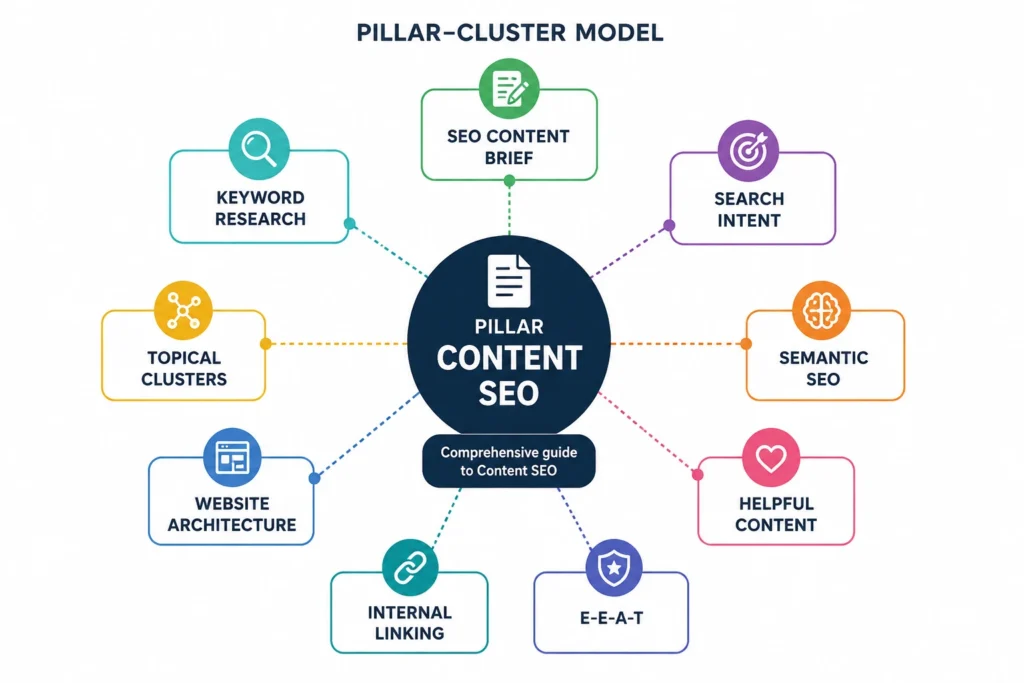
Each cluster article explores a distinct aspect of the broader topic while linking naturally to related pages. This creates a network of content that reinforces topical relevance and distributes authority throughout the website.
How Search Engines Interpret Topical Clusters
Modern search engines evaluate much more than keywords. They analyze:
- Relationships between topics
- Contextual relevance
- Internal linking patterns
- Entity connections
- Search intent fulfillment
- Content depth
- User engagement signals
When a website consistently covers a topic from multiple angles, search engines gain greater confidence in its expertise. This confidence can improve rankings across a broader range of related queries, not just the exact keywords targeted by individual pages.
For AI-powered search systems and large language models (LLMs), interconnected content also provides stronger contextual signals. Clear relationships between pages make it easier for AI systems to identify authoritative sources and generate accurate responses.
Pillar Pages vs Cluster Pages
Although pillar pages and cluster pages work together, they serve different purposes within a topical cluster.
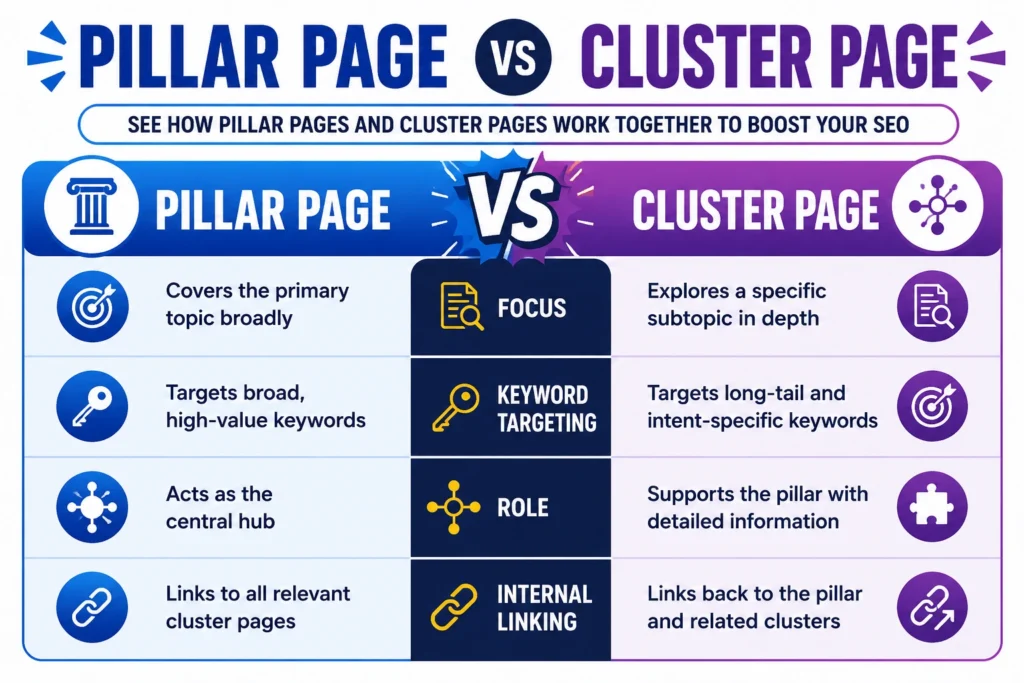
Pillar Page
A pillar page provides a comprehensive introduction to a broad subject. It answers foundational questions, introduces key concepts, and guides readers toward supporting resources for deeper learning.
For instance
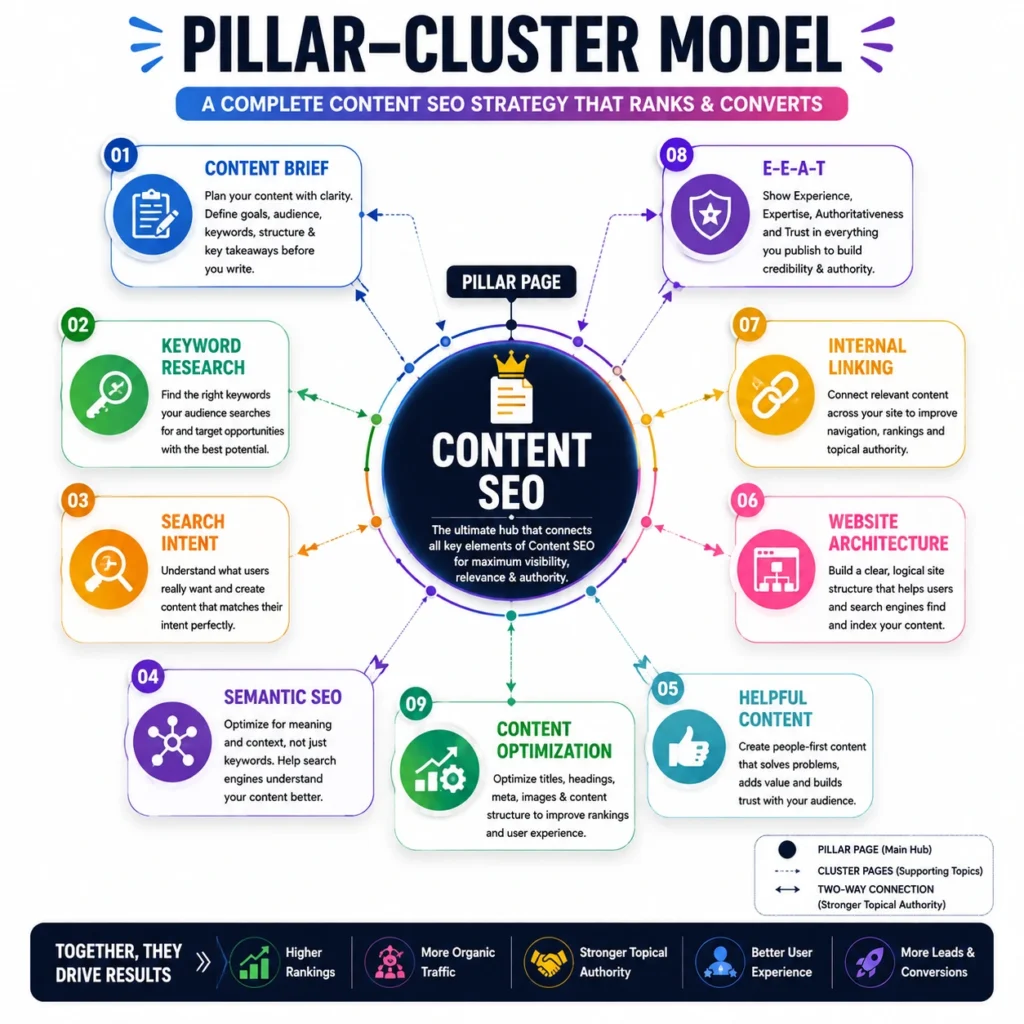
Each of these topics then has its own dedicated cluster page.
Cluster Pages
Cluster pages dive deeply into one specific area of the pillar topic. Instead of repeating information from the pillar, they provide detailed explanations, practical examples, workflows, checklists, and implementation guidance.
For example, the SEO Content Brief cluster article focuses exclusively on planning SEO-friendly content. It explains how to define keywords, analyze search intent, structure outlines, map internal links, and create editorial guidelines. While it supports the broader Content SEO topic, it offers the depth needed for users seeking detailed guidance.
This division of responsibilities prevents duplication and strengthens topical relevance across the site.
Relationship Between Topics and Subtopics
Effective topical clusters reflect the natural hierarchy of information. Every broad subject contains multiple related concepts, and each concept can be explored through focused content.
Consider the following Illustration
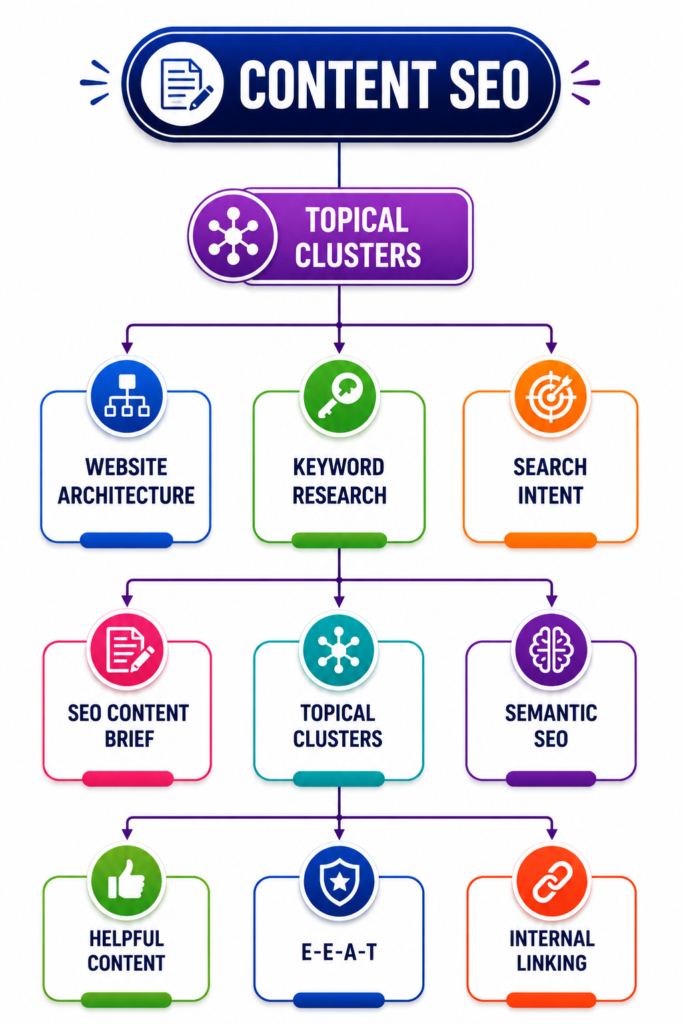
Each cluster can also support additional subtopics.
For instance:
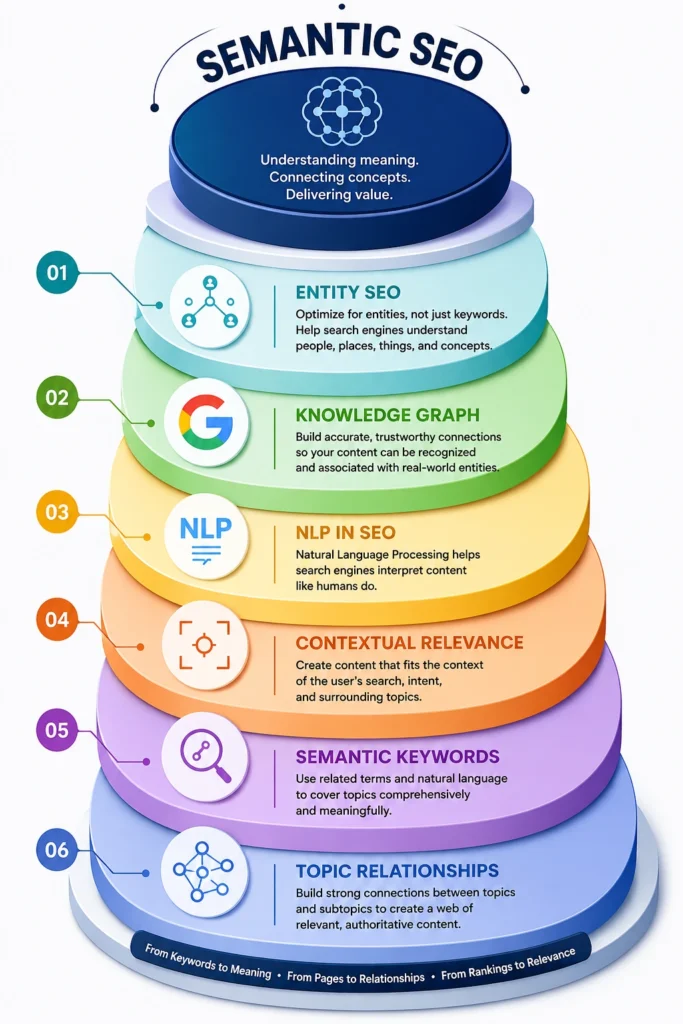
This layered structure creates a logical content ecosystem where every page has a clear purpose. Users can move naturally from general concepts to specialized topics without encountering unnecessary repetition or isolated content.
It also enables websites to scale efficiently. As new industry trends emerge, additional cluster pages can be added without disrupting the existing architecture.
Why Topical Clusters Matter for SEO
Topical clusters have become a cornerstone of modern SEO because they align with how search engines evaluate expertise, relevance, and user satisfaction. Rather than rewarding websites that publish the most pages or repeat the same keywords, search engines increasingly favor those that demonstrate comprehensive knowledge of a subject.
By organizing related content into interconnected clusters, websites create a stronger content ecosystem that benefits both users and search engines. This approach improves discoverability, strengthens internal linking, supports semantic understanding, and makes it easier for AI-powered search systems to interpret relationships between topics.
The following sections explain the key SEO advantages of using topical clusters.
Build Topical Authority
Topical authority refers to the level of expertise and trust a website demonstrates within a specific subject area. Instead of relying on a single article to rank for a broad topic, topical clusters build authority through comprehensive coverage of related concepts.
For example, a website that publishes only one article about Content SEO provides limited context. In contrast, a website with interconnected guides on SEO Content Briefs, Search Intent, Keyword Research, Semantic SEO, Website Architecture, Helpful Content, Internal Linking, and E-E-A-T presents a far more complete picture of the subject.
This comprehensive coverage signals to search engines that the website is a reliable source of information. As the content ecosystem grows, the site’s ability to rank for related queries also improves.
Improve Search Engine Understanding
Search engines analyze more than individual pages. They evaluate how pages relate to one another, how topics are organized, and whether content satisfies user intent across an entire subject.
Topical clusters provide this context by connecting relevant pages through logical internal links and semantic relationships.
As a result, search engines can more easily:
- Understand topic hierarchy
- Recognize relationships between concepts
- Identify the main subject of each page
- Crawl related content efficiently
- Associate supporting pages with the pillar topic
This clearer structure helps search engines interpret the website as a cohesive knowledge source rather than a collection of disconnected articles.
Strengthen E-E-A-T Signals
Google emphasizes Experience, Expertise, Authoritativeness, and Trustworthiness (E-E-A-T) when evaluating content quality. While E-E-A-T is not a direct ranking factor, it influences how search quality systems assess the credibility of content.
Topical clusters contribute to stronger E-E-A-T signals by:
- Demonstrating consistent expertise across related topics
- Providing comprehensive coverage instead of superficial content
- Organizing information in a logical, user-friendly manner
- Supporting claims with authoritative sources and practical examples
- Encouraging regular updates that keep information accurate
When readers can navigate seamlessly from foundational concepts to advanced guidance, they are more likely to perceive the website as a trustworthy resource.
Improve AI Search Visibility
AI-powered search experiences increasingly rely on understanding entities, context, and relationships between topics rather than matching isolated keywords. Well-structured topical clusters provide these signals by connecting related content into a coherent knowledge framework.
When pages are organized around a central topic and supported by comprehensive subtopics, AI systems can more easily identify the site’s expertise, interpret concept relationships, and surface relevant content in AI-generated responses.
This makes topical clusters an important foundation for future-facing search strategies as AI continues to influence how users discover information.
Increase Organic Rankings
Topical clusters improve organic visibility by combining comprehensive topic coverage, strategic internal linking, and strong search intent alignment.
Instead of competing with multiple pages targeting similar keywords, each page has a distinct purpose within the broader topic. This reduces internal competition and strengthens the overall authority of the content ecosystem.
Over time, this structure can lead to:
- Improved keyword rankings across related queries
- Greater visibility for long-tail searches
- Increased organic traffic
- Better crawl efficiency
- More opportunities to earn featured snippets and AI citations
As search engines gain confidence in your expertise, they are more likely to rank multiple pages from your cluster, expanding your presence across the search results.
Conclusion
Topical clusters provide a structured way to build topical authority through connected, purpose-driven content. Instead of creating isolated articles around individual keywords, they organize a broad topic into a central pillar page and focused cluster pages that address related search intents.
The real strength of topical clusters comes from the relationships between these pages. Strategic internal linking, clear topic hierarchy, comprehensive coverage, and distinct search intent help users navigate your content while giving search engines stronger context about your expertise.
A successful topical cluster also works alongside other Content SEO elements. An effective SEO Content Brief helps plan each page, Semantic SEO strengthens relationships between concepts and entities, Website Architecture provides the structural foundation, and E-E-A-T supports credibility and trust.
The goal is not to publish more content simply to create a larger cluster. Every page should have a clear purpose, unique value, and meaningful connection to the broader topic.
When planned strategically, topical clusters can turn a collection of individual pages into a cohesive content ecosystem that supports topical authority, improves discoverability, and creates a stronger foundation for long-term organic growth.
