Social media marketing is the use of social media platforms to promote a business, connect with an audience, build brand awareness, and achieve marketing goals. It involves creating useful content, engaging with followers, building communities, working with creators, and using paid campaigns when needed.
Businesses use social media to reach people where they already spend time online. Platforms such as Facebook, Instagram, LinkedIn, YouTube, and X provide different ways to attract attention and build relationships.
However, social media marketing is more than posting content. Effective SMM requires a clear strategy, audience research, relevant content, engagement, and performance measurement.
This guide explains what social media marketing means, how it works, why it matters, its major types, platforms, strategy, content, customer journey, metrics, examples, and best practices.
What Is Social Media Marketing?
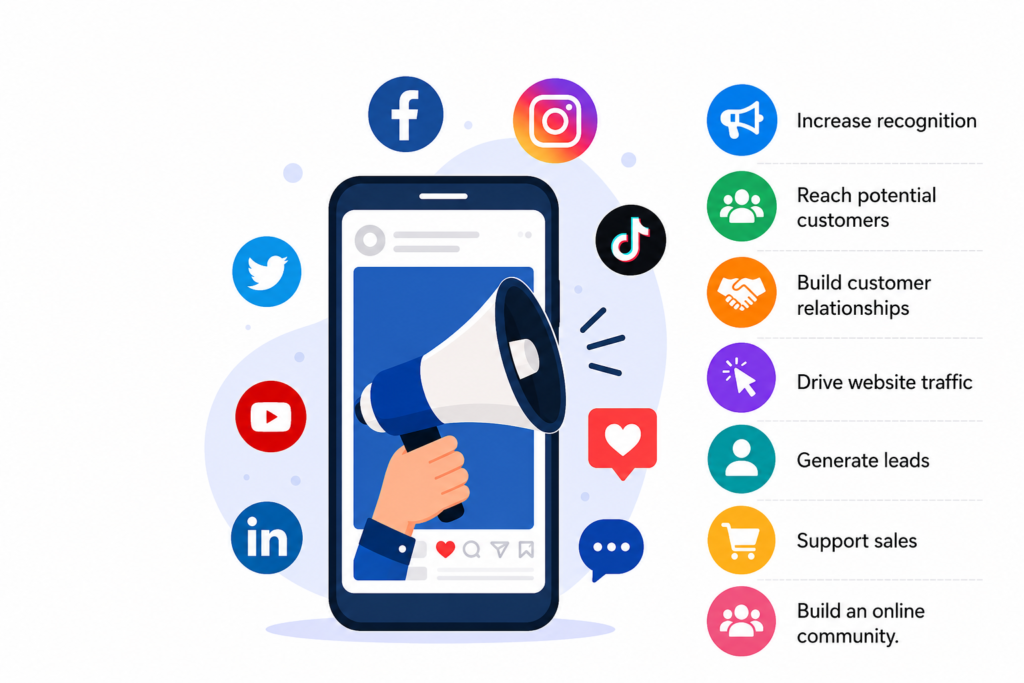
Social media marketing, or SMM, is a digital marketing approach that uses social media platforms to reach and engage a target audience.
Businesses can use social media to:
- Increase recognition
- Reach potential customers
- Build customer relationships
- Drive website traffic
- Generate leads
- Support sales
- Build an online community
For example, a clothing business can use Instagram to showcase its products. It can answer questions through comments and messages. It can also use paid campaigns to reach people interested in its products.
The goal is not always an immediate sale. Social media can first create awareness and trust. It can then encourage engagement and support conversions.
What Are the Types of Social Media Marketing?
Social media marketing includes several approaches. Businesses can combine them based on their goals, audience, and available resources.
Organic Social Media Marketing
Organic social media marketing involves creating and publishing content without paying for distribution.
It includes:
- Regular posts
- Videos
- Stories
- Community interaction
- Conversations with followers
The focus is usually on building long-term visibility and relationships.
Paid Social Media Marketing
Paid social media marketing uses advertising budgets to distribute content to selected audiences.
Businesses can use paid campaigns to support goals such as:
- Brand awareness
- Website traffic
- Lead generation
- Conversions
Paid social is useful when businesses need to reach specific audiences or scale campaign visibility.
Influencer Marketing
Influencer marketing involves collaborating with creators who have an established audience.
A relevant creator can introduce a product, service, or brand to their followers. The best partnerships focus on audience relevance rather than follower count alone.
User-Generated Content
User-generated content, or UGC, is content created by customers or users.
Examples include:
- Reviews
- Product photos
- Customer videos
- Experiences shared online
UGC can provide social proof and encourage other people to engage with a brand.
Community Marketing
Community marketing focuses on building relationships between a brand and its audience.
Discussions, useful content, responses, groups, and events can help create an active community.
Which Social Media Platforms Are Used for Marketing?
Different social media platforms provide different marketing opportunities.
| Platform | Common Marketing Opportunity |
| Communities, local businesses, broad audiences | |
| Visual content, products, creators | |
| B2B and professional audiences | |
| YouTube | Video and educational content |
| X | Conversations, trends, and real-time content |
Businesses do not need to use every platform.
The right choice depends on the target audience, marketing goals, content format, business type, and available resources.
Define Goals → Identify Audience → Choose Platforms → Research Competitors → Develop Content Strategy → Publish & Engage → Measure & Optimize
Each step builds on the previous one, helping businesses move from planning to execution and continuous improvement.
1. Define Your Marketing Goals
Start by defining what you want social media to achieve.
Your goals may include:
- Brand awareness
- Website traffic
- Lead generation
- Engagement growth
- Sales support
- Community building
Make goals measurable to track performance and progress easily.
2. Identify Your Target Audience
Understand who you want to reach.
Consider their:
- Demographics
- Interests
- Needs
- Behaviors
- Problems
- Platform preferences
Audience research helps you create content that is more relevant, useful, and engaging. The better you understand your audience, the more effective your strategy will be.
3. Choose the Right Social Media Platforms
Select platforms where your target audience is most active.
For example, a B2B company may prioritize LinkedIn, while a visually focused product business may perform better on Instagram or TikTok.
Focus on platforms where your business can consistently create and maintain valuable content instead of trying to be everywhere at once.
4. Research Your Competitors
Study competitors to understand how they use social media.
Look at their:
- Platforms
- Content formats
- Engagement levels
- Posting patterns
- Messaging style
- Positioning
Competitor research should provide insights into what works in your industry. The goal is to learn from them, not copy them directly.
5. Develop Your Content Strategy
Your content strategy defines what you will post, why you are posting it, and how it supports your goals.
It includes:
Content Types
Different formats such as images, videos, carousels, stories, blogs, or reels.
Content Pillars
Core themes your content will focus on, such as education, product updates, industry insights, or customer stories.
Content Calendar
A schedule that organizes what you will post and when. It helps maintain consistency and plan campaigns in advance.
CTAs (Calls to Action)
Clear actions you want users to take, such as visiting a website, signing up, commenting, or making a purchase.
A strong content strategy ensures every post has a purpose and contributes to your overall goals.
6. Publish and Engage
Publishing content is only one part of social media marketing.
After posting, focus on engagement:
- Respond to comments and messages
- Encourage conversations
- Participate in discussions
- Listen to audience feedback
- Build relationships with followers
Engagement transforms social media from a one-way communication channel into an interactive and relationship-driven platform.
7. Measure and Optimize Results
Regularly review your performance to understand what is working and what is not.
Track key metrics such as:
- Reach and impressions
- Engagement rate
- Click-through rate
- Website traffic
- Leads and conversions
Use these insights to improve your strategy. Adjust your content, posting times, platforms, messaging, and targeting based on real data.
Continuous optimization ensures your social media marketing becomes more effective over time.
What Types of Content Work Best on Social Media?
There is no single content format that works for every business.
Common social media content types include:
- Educational posts
- Promotional posts
- Short-form videos
- Long-form videos
- Images
- Infographics
- Stories
- Polls
- User-generated content
- Behind-the-scenes content
Different content formats can serve different purposes.
Educational content can answer customer questions and build trust. Product demonstrations can help people understand an offer. Testimonials and UGC can provide social proof.
A useful relationship is:
Content → Engagement → Relationship → Conversion
Not every social media post needs to make a direct sale. Valuable content can first build attention and trust.
How Does Social Media Support the Customer Journey?
Social media can support different stages of the customer journey.
Awareness
At the awareness stage, businesses introduce their brand, products, services, or ideas to potential customers.
Educational posts, videos, informative content, and creator collaborations can help attract attention.
Consideration
People who become interested may start comparing solutions.
Product demonstrations, guides, reviews, testimonials, and useful explanations can help them evaluate an offer.
Conversion
At the conversion stage, social media can encourage people to take an action.
Examples include:
- Making a purchase
- Filling out a form
- Booking a service
- Registering for an event
- Sending an inquiry
Retention
Social media can also help businesses stay connected with existing customers.
Helpful content, customer support, community discussions, and updates can strengthen ongoing relationships.
Advocacy
Satisfied customers may share experiences, reviews, or user-generated content.
This can introduce the business to new audiences and provide social proof.
The overall journey can be summarized as:
Awareness → Consideration → Conversion → Retention → Advocacy
Click-through rate measures the percentage of users who click a link or call to action.
Website Traffic
Website traffic shows how many visitors arrive through social media.
Leads
Leads are potential customers generated through your social media activities.
Conversions
Conversions measure completed actions, such as purchases, registrations, or enquiries.
Return on Investment
ROI helps evaluate whether the results justify the marketing investment.
The most important metrics should always connect to the original campaign objective.
Social Media Marketing Examples
E-commerce Business
An online clothing store can use Instagram to showcase products through images and short videos.
Interested users can visit the website and complete a purchase.
Product discovery → Social content → Website → Purchase
Local Business
A local restaurant can share useful local content, product images, offers, and customer experiences on Facebook and Instagram.
Engagement can lead to inquiries and visits.
Local content → Engagement → Enquiries → Customers
B2B Business
A B2B company can publish educational LinkedIn content about problems faced by its target customers.
Useful content can build authority and encourage website visits.
Educational content → Authority → Website traffic → Leads
Personal Brand
A professional can share educational content around their area of expertise.
Consistent publishing can grow an audience and create trust.
Educational content → Audience growth → Trust → Service enquiries
What Are the Challenges of Social Media Marketing?
Social media marketing provides opportunities, but it also has limitations.
Consistency Requires Resources
Creating useful content regularly requires time, planning, skills, and resources.
Competition Is High
Businesses compete with many other brands and creators for audience attention.
Algorithms Can Change
Platform algorithms can change how content is distributed. Businesses may need to adapt their strategies over time.
Negative Feedback Is Possible
Public comments can include criticism or negative experiences. Businesses need a clear approach to handling feedback.
Results May Take Time
Social media marketing does not always produce immediate results. Building awareness, trust, and relationships can require consistent effort.
Understanding these challenges helps businesses set realistic expectations.
Social Media Marketing vs Digital Marketing
Social media marketing is one part of digital marketing.
| Social Media Marketing | Digital Marketing |
| Focuses on social platforms | Covers multiple digital channels |
| Uses social content and engagement | Includes SEO, email, PPC, SMM, and more |
| Social audiences are central. | Covers multiple online audiences |
| One digital marketing discipline | Broader marketing discipline |
For example, a business may use SEO to attract search traffic, email marketing to nurture leads, and social media marketing to build engagement.
Social media marketing can also support broader strategies such as performance marketing, where campaigns are optimized around measurable results.
Social Media Marketing Best Practices
Follow these practices to build a stronger social media strategy:
- Know your target audience.
- Set measurable marketing goals.
- Choose relevant platforms.
- Create useful and valuable content.
- Maintain a consistent publishing approach.
- Encourage meaningful engagement.
- Adapt content to each platform.
- Monitor social media analytics.
- Test and optimize your strategy.
- Maintain an authentic brand voice.
- Follow relevant trends without losing brand identity.
- Focus on audience value instead of constant promotion.
The key principle is consistency with purpose.
Posting frequently without a clear strategy does not automatically produce better results.
Conclusion
Social media marketing is more than publishing posts on Facebook, Instagram, LinkedIn, YouTube, or X.
Effective SMM combines strategy, content, platforms, engagement, and measurement. Businesses first define their goals and audience. They then choose suitable platforms, create useful content, engage with their communities, and measure performance.
The best approach is not to be active everywhere. It is to use the right platforms, create valuable content, understand the audience, and continuously improve based on data.
When social media marketing becomes part of a broader digital marketing strategy, it can support brand awareness, customer relationships, website traffic, lead generation, and long-term business growth.
