Every purchase decision, no matter how rational it appears, is shaped by psychology. The colors on a landing page, the number of options on a pricing table, the words used in a subject line — all of it interacts with how the human brain processes information, risk, and decides what to trust. Marketing psychology is the discipline that studies these interactions and turns them into repeatable strategies.
Marketing psychology is the application of psychological principles — how people think, feel, and make decisions — to marketing strategy. Rather than guessing what will resonate with an audience, marketers use established behavioral science to predict how people will respond to messaging, design, pricing, and offers.
The Psychological Factors That Influence Consumer Behavior
Several categories of psychological factors shape buying decisions:
- Cognitive factors — how people process information, including attention, memory, and mental shortcuts (heuristics).
- Emotional factors — Feelings such as trust, fear of missing out (FOMO), nostalgia, and excitement often influence the final decision more than logic.
- Social factors — the influence of peers, community, and perceived norms on individual choices.
- Motivational factors — the underlying needs a product or service satisfies, from status to convenience to security.
Understanding which of these factors is dominant for a given audience is what allows marketers to choose the right psychological principle for the right moment in the customer journey.
The Science Behind It: Key Fields That Shape Marketing Psychology
Marketing psychology isn’t a single discipline — it borrows from several fields of research.
Neuromarketing
Neuromarketing studies how the brain physically responds to marketing stimuli (external cues and tools that companies use to influence buyer behavior ). Using tools like eye-tracking, EEG(electroencephalography, in marketing is a neuromarketing technique that measures real-time electrical brain activity) , and functional brain imaging, researchers can observe subconscious reactions to an ad, a package design, or a color palette — reactions people often can’t articulate themselves. This is why some of the most effective marketing decisions (like button color or image placement) are tested rather than debated.
Behavioral Economics
Behavioral economics documents the ways people deviate from purely rational decision-making. It’s the study of “systematic irrationality” — predictable patterns in how people misjudge probability, overvalue what they already own, or let an arbitrary number anchor their sense of what something should cost. Nearly every principle in the list below has its roots in behavioral economics research.
Consumer & Social Psychology
Consumer psychology looks specifically at the mental processes involved in searching for, evaluating, and using products. Social psychology adds the layer of how other people — peers, influencers, in-groups — shape those same decisions, which is why social proof and community-driven marketing are so effective.
Evolutionary, Cultural & Organisational Psychology
Some responses to marketing are shaped by deeper forces than a single campaign. Evolutionary psychology explains why scarcity and status cues trigger such strong reactions — they map onto survival instincts. Cultural psychology explains why the same message can land differently across regions or generations. Organisational psychology becomes relevant in B2B marketing, where buying decisions are filtered through group dynamics and internal politics rather than individual preference alone
18 Marketing Psychology Principles
1. Social Proof
People look to others’ behavior to guide their own decisions, especially under uncertainty. Reviews, testimonials, user counts, and “best seller” labels all work by showing that other people have already made — and validated — the same choice.
2. Reciprocity
When someone receives something of value, they feel an inclination to give something back. Free trials, useful content, and small gifts all activate this principle, often resulting in a sale or a subscription in return.
3. Scarcity & Urgency
Limited-time offers, low-stock warnings, and exclusivity all tap into fear of missing out (FOMO). When something feels finite, people place a higher value on it and act faster to secure it.
4. Anchoring Bias
The first number or piece of information a person sees becomes a reference point for everything that follows. A higher “original price” shown next to a discounted price makes the discount feel larger, even if the anchor price was never realistic.
5. Loss Aversion
People feel the pain of losing something roughly twice as strongly as the pleasure of gaining something of equal value. Framing an offer around what a customer stands to lose by not acting is often more persuasive than framing it around what they’ll gain.
6. Decoy Effect
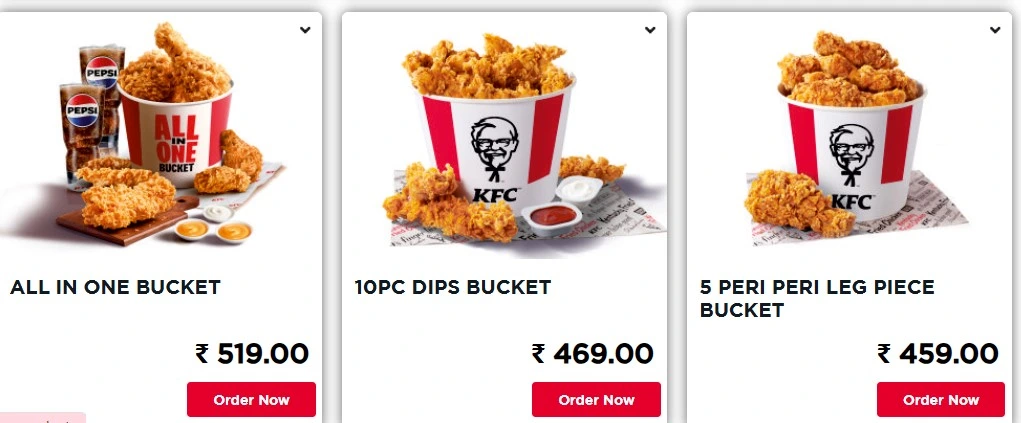
Adding a third, deliberately less attractive option to a set of two changes how people perceive the original two — usually pushing them toward the higher-priced option. This is a staple of SaaS and subscription pricing pages.
7. Focusing Effect
People give disproportionate weight to whatever detail is placed most prominently in front of them, even if it isn’t the most important factor in the decision. Strategic emphasis — through design, copy, or layout — can shift what a customer prioritizes.
8. Colour Psychology
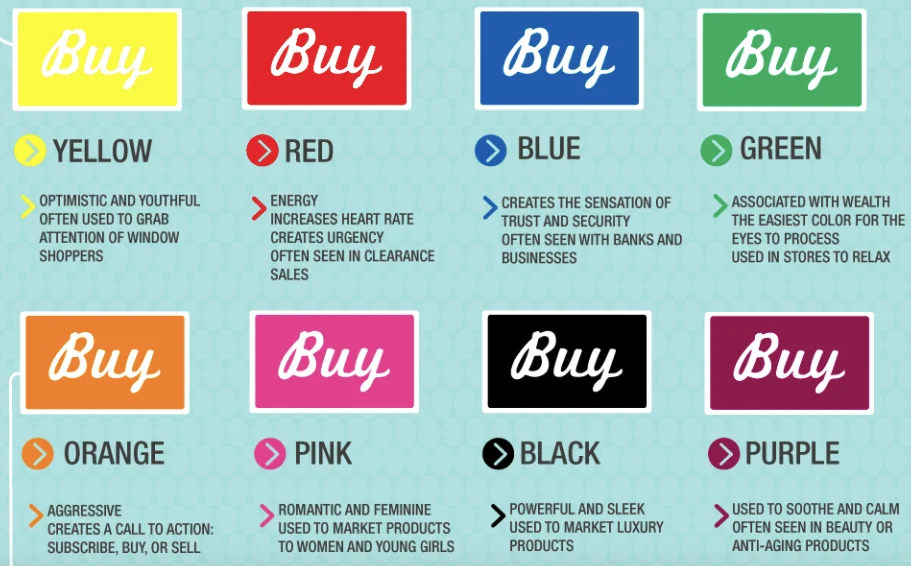
Colour influences mood and perception before a person reads a single word of copy. Blue is commonly associated with trust and stability, red with urgency and excitement, green with growth and calm. Color choices should align with the emotional response a brand wants to trigger.
9. Fitts’s Law
In interface design, the time it takes a person to complete an action is a function of the size of the target and the distance to it. Larger, closer, more accessible call-to-action buttons reduce friction and increase conversions.
10. IKEA Effect
People place a higher value on things they’ve helped create or customize. Product configurators, quizzes that build a personalized recommendation, and onboarding flows that involve user input all benefit from this effect.
An example of a Kerala marketing campaign that leverages the IKEA Effect: Nirapara sambar mix,in Kerala, traditional food preparation is deeply connected to home and care. Ready-made instant curries often fail to build long-term brand loyalty because home cooks feel a sense of detachment—as if they didn’t really “cook” the meal themselves.
Headline: “Ente Kaippunyam, Ente Sambar”
Visual: A family sitting around a traditional Kerala Sadya feast, praising the mother/cook. Cut to a split scene showing the cook actively chopping local vegetables, boiling lentils, and adding the brand’s pre-portioned spice mix at the perfect moment.
The Pitch: The advertisement doesn’t promise a finished dish; it promises to give you the exact raw components (pre-measured spices, roasted coconut base) to create an authentic dish effortlessly with your own hand.
11. Mere Exposure Effect
Repeated exposure to a brand, message, or product increases familiarity — and familiarity increases preference. This is the psychological basis for retargeting and consistent, repeated brand presence across channels. This is the psychological basis for retargeting and consistent, repeated brand presence across channels.
12. Information-Gap Theory
Curiosity is triggered when people become aware of a gap between what they know and what they want to know. Headlines and subject lines that hint at valuable information — without giving it all away — drive clicks by exploiting this gap.
13. Pygmalion Effect
When people are treated as capable, valued, or high-achieving, they tend to perform accordingly. In marketing, addressing customers as savvy, discerning, or ahead of the curve can increase engagement and loyalty.
14. Novelty & Fresh-Start Effect
People are more motivated to take action around symbolic “fresh start” moments — a new year, a new month, a birthday. Novelty itself also captures attention more effectively than the familiar, which is why “new” and “just launched” remain effective words in marketing copy.
15. Authority Cues
People are more likely to trust and act on information from a perceived expert or authority. Credentials, media mentions, expert endorsements, and certifications all function as shortcuts that reduce the customer’s need to evaluate every claim independently.
16. Unity & Belonging
When people feel part of a shared identity or community, their loyalty increases. Brand communities, shared values messaging, and “us” language build unity that goes beyond a single transaction.
Example: LIC’s Family-Centric Advertisements
LIC’s Malayalam advertisements frequently portray parents, children, and grandparents sharing important life moments. Rather than highlighting policy features or premiums, the campaigns emphasize emotional values such as family security, responsibility, and togetherness. The message suggests that purchasing life insurance is not merely a financial decision but an act of caring for one’s family. This approach leverages the Unity & Belonging principle of marketing psychology, where consumers are motivated by the desire to protect and remain connected to the people who matter most. By associating the brand with family values and social identity, LIC strengthens trust and increases the likelihood of purchase.
17. Storytelling & Nostalgia
Narratives are processed and remembered more easily than lists of facts, and stories that evoke nostalgia tap into strong emotional associations. Brands that tell a story — rather than list features — tend to be more memorable and more persuasive.
18. Humor & Sensory Triggers
Humor lowers defenses and increases likability, making a brand’s message easier to absorb. Sensory language and imagery — describing how something looks, sounds, or feels — engages more of the brain than plain description, increasing recall and emotional impact.
How to Apply Marketing Psychology by Channel
Principles are only useful once they’re mapped to where the customer actually is.
Digital Marketing
Personalization uses behavioral and demographic data to tailor messaging to the individual, directly leveraging relevance and the focusing effect. Targeted advertising applies scarcity, social proof, and anchoring at scale, with fast feedback on what resonates. UX design decisions — from button placement to page load speed — put Fitts’s Law and friction-reduction principles into practice.
Social Media
Influencer marketing borrows authority and social proof simultaneously, since audiences already trust the influencer’s judgment. Community engagement builds the sense of unity and belonging that keeps customers loyal beyond a single purchase. User-generated content combines social proof with authenticity, since it comes from peers rather than the brand itself. These principles can also support a broader social media marketing strategy.
Branding & Pricing
Brand identity work relies heavily on color psychology, consistency (mere exposure), and storytelling to build long-term recognition and trust. Psychological pricing — prices ending in .99, tiered plans, anchored discounts — applies anchoring and the decoy effect directly to the moment of purchase. Bundle pricing frames a set of products as higher value than the sum of their parts, reducing the perceived risk of the decision.
Marketing Psychology and Your Business Goals
These principles aren’t ends in themselves — they exist to move specific business metrics.
- Driving conversions: scarcity, urgency, anchoring, and clear CTAs (Fitts’s Law) reduce hesitation at the point of decision.
- Building brand loyalty: unity, storytelling, and consistent exposure build the emotional connection that turns one-time buyers into repeat customers.
- Reducing drop-offs: simplified UX, reduced friction, and clear information (avoiding overload) address the points where potential customers abandon a journey.
- Improving customer retention: reciprocity, personalization, and community engagement keep customers engaged well past the first purchase.
Using Marketing Psychology Responsibly
Every principle above can be used to build genuine trust — or to manipulate. The difference lies in intent and execution.
Transparency
Claims about scarcity, pricing, or social proof should be accurate. A “low stock” warning that isn’t true, or a countdown timer that resets, damages trust the moment a customer notices — and many do.
Protecting Customer Privacy
Personalization and behavioral targeting depend on data. Businesses should be clear about what data is collected and why, and should stay ahead of regulations like GDPR rather than treating compliance as an afterthought.
Avoiding Manipulation
There’s a meaningful line between influence and manipulation, often described as the difference between “dark patterns” and ethical design. Ethical marketing psychology nudges people toward decisions that genuinely serve their interests; manipulative marketing exploits bias to produce decisions people wouldn’t make with full information.
Value-Driven Marketing
The most sustainable use of marketing psychology starts from a real value proposition. Psychological principles amplify a good offer — they can’t substitute for one indefinitely. Used on a weak or misleading product, these same techniques accelerate churn and reputational damage rather than growth.
Conclusion
Marketing psychology works because it’s grounded in how people actually think and decide, not how marketers wish they would. Neuromarketing and behavioral economics explain the “why” behind consumer behavior; the 18 principles above provide the “how.” Applied across digital, social, and pricing channels — and tied back to real business goals like conversion, loyalty, and retention — these principles can meaningfully improve marketing performance. Applied transparently and with respect for customer privacy, they build the kind of trust that compounds over time rather than eroding it.
