Technical SEO is the foundation of every successful SEO strategy. While high-quality content and backlinks help improve rankings, search engines must first be able to crawl, understand, and index your website. Without a strong technical foundation, even the best content may struggle to appear in search results.
Technical SEO focuses on optimizing your website’s infrastructure to improve crawling, indexing, performance, security, and user experience. It ensures that search engines can access your important pages efficiently while providing visitors with a fast, secure, and mobile-friendly browsing experience. These improvements help search engines evaluate your website more effectively and support long-term organic growth.
In this complete guide, you’ll learn what Technical SEO is, why it is important, its purpose, and the essential components that build a technically optimized website. We’ll cover Website Crawling & Indexing, Website Architecture, Technical Performance, Server & Security, International SEO, JavaScript SEO, and Structured Data. Understanding these components will help you build a website that performs well for both users and search engines.
What is Technical SEO?
Technical SEO is the process of optimizing a website’s technical foundation so search engines can crawl, understand, index, and rank its pages more effectively. Instead of focusing on content creation or link building, Technical SEO improves the behind-the-scenes elements that affect how your website performs in search engines.
A technically optimized website makes it easier for search engine crawlers to access important pages and understand their content. It also improves website speed, mobile usability, security, navigation, and overall user experience. Together, these improvements create a strong foundation that supports every other SEO and GEO effort.
Technical SEO is one of the three main pillars of Search Engine Optimization, alongside On-Page SEO and Off-Page SEO. While each plays a different role, they work together to improve a website’s visibility in search results.
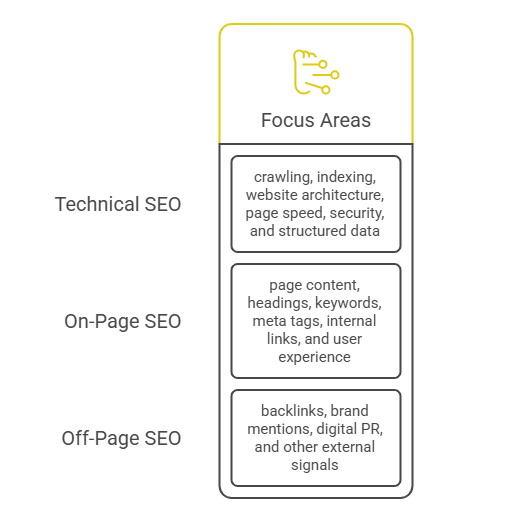
Think of your website as a house. Technical SEO builds the foundation and framework, On-Page SEO designs and furnishes the rooms, and Off-Page SEO builds the house’s reputation in the neighborhood. If the foundation is weak, the rest of the house cannot perform at its best.
For this reason, Technical SEO is often the first step in building a successful SEO strategy. A technically sound website allows search engines to discover your content efficiently, understand its relevance, and index it correctly. Once this foundation is in place, your content and authority-building efforts can achieve better and more sustainable results.
Why is Technical SEO Important?
Technical SEO is important because it helps search engines access, understand, and evaluate your website efficiently. Even if you publish high-quality content, your pages may not perform well in search results if search engines cannot crawl or index them correctly. A strong technical foundation ensures that your SEO efforts are fully supported.
Improves Website Crawling
Search engines use automated bots, also called crawlers, to discover web pages. Technical SEO helps these crawlers navigate your website efficiently through optimized site architecture, internal links, XML sitemaps, and robots.txt. As a result, your important pages are more likely to be discovered and revisited.
Supports Better Indexing
After crawling a page, search engines decide whether it should be stored in their index. Technical SEO helps remove barriers that prevent indexing, such as duplicate content, broken links, incorrect canonical tags, or crawl errors. Proper indexing increases the chances of your pages appearing in relevant search results.
Enhances Website Performance
Website performance is a key ranking factor and an essential part of user experience. Technical SEO improves performance by optimizing page speed, Core Web Vitals, caching, image delivery, and content distribution. A faster website keeps visitors engaged and reduces bounce rates.
Creates a Better User Experience
Search engines aim to provide users with the best possible experience. Technical SEO contributes by making websites fast, secure, mobile-friendly, and easy to navigate. When users can quickly find information without delays or technical issues, they are more likely to stay on your website.
Strengthens Website Security
A secure website builds trust with both users and search engines. Technical SEO includes implementing HTTPS, maintaining secure server configurations, and resolving security-related issues. These practices protect user data while improving your website’s credibility.
Supports Mobile-First Indexing
Most users now browse the internet on mobile devices, and search engines primarily evaluate the mobile version of a website. Technical SEO ensures that your website is responsive, loads quickly on all screen sizes, and delivers a consistent experience across devices.
Helps Search Engines Understand Your Content
Technical SEO goes beyond making pages accessible. Features such as structured data, schema markup, canonical tags, and clear website architecture help search engines interpret your content more accurately. Better understanding often leads to improved visibility and eligibility for enhanced search features.
Reduces Technical Errors
Technical issues such as broken links, redirect chains, duplicate pages, server errors, or slow response times can negatively affect your website’s performance. Technical SEO identifies and fixes these problems before they impact search visibility or user experience.
Builds a Strong Foundation for SEO
Technical SEO forms the foundation of every successful SEO strategy. Once your website is technically optimized, On-Page SEO and Off-Page SEO efforts become more effective because search engines can crawl, index, and evaluate your content without unnecessary obstacles.
In short, Technical SEO is not just about fixing technical problems. It creates an environment where search engines can efficiently understand your website and users can enjoy a fast, secure, and reliable browsing experience. This strong foundation supports long-term organic growth and helps your website compete more effectively in search results.
What are the Main Components of Technical SEO?
Technical SEO consists of several components that work together to improve your website’s crawlability, indexability, performance, security, and search visibility. Each component plays a unique role in helping search engines understand your website while delivering a fast and reliable experience for users.
The following are the main components of Technical SEO that every website owner, SEO professional, and digital marketer should understand.
Website Crawling & Indexing
Website Crawling & Indexing is a fundamental part of Technical SEO that helps search engines discover, understand, and store your web pages. Optimizing these processes ensures your important pages are crawled and indexed efficiently.
Robots.txt
Robots.txt is a key part of Technical SEO that tells search engine crawlers which pages or folders they can access. It helps manage crawl activity and prevents unnecessary pages from being crawled.
XML Sitemaps
XML Sitemaps are an essential part of Technical SEO that list the important pages on your website. They help search engines discover new and updated content more efficiently.
Crawl Budget
Crawl Budget is an important part of Technical SEO that determines how many pages search engines crawl within a given period. Optimizing it helps search engines focus on your most valuable pages.
Orphan Pages
Orphan Pages are a Technical SEO issue because they have no internal links pointing to them. As a result, they are difficult for users and search engines to discover.
Website Architecture
Website Architecture is an essential part of Technical SEO that organizes your website into a logical structure. A well-planned architecture improves navigation, crawling, and indexing.
URL Structure
URL Structure is a key part of Technical SEO that creates clean and descriptive web addresses. Well-structured URLs help users and search engines understand page content.
Internal Linking
Internal Linking is an important part of Technical SEO that connects related pages across your website. It improves navigation, distributes authority, and helps search engines crawl your content.
Breadcrumbs
Breadcrumbs are a valuable part of Technical SEO that show users their location within your website hierarchy. They also help search engines understand your site structure.
Canonical Tags
Canonical Tags are a key part of Technical SEO that identify the preferred version of duplicate or similar pages. They help consolidate ranking signals and prevent duplicate content issues.
Technical Performance
Technical Performance is a core part of Technical SEO that focuses on improving website speed, stability, and responsiveness. Better performance creates a stronger user experience and supports search visibility.
Core Web Vitals
Core Web Vitals are an important part of Technical SEO that measure loading speed, interactivity, and visual stability. These metrics help evaluate the overall user experience of a webpage.
Page Speed
Page Speed is a key part of Technical SEO that measures how quickly a webpage loads. Faster pages improve user experience and help search engines evaluate website performance.
CDN
A Content Delivery Network (CDN) is an important part of Technical SEO that delivers website files from servers closer to users. This reduces loading time and improves website performance worldwide.
Caching
Caching is a valuable part of Technical SEO that stores website resources temporarily for faster loading. It reduces server load and improves page speed.
Image Optimization
Image Optimization is a key part of Technical SEO that reduces image file size without affecting quality. Optimized images improve loading speed and overall website performance.
Server & Security
Server & Security is an essential part of Technical SEO that keeps your website secure, reliable, and accessible. A well-configured server supports better crawling, indexing, and user trust.
HTTPS
HTTPS is a fundamental part of Technical SEO that encrypts data exchanged between your website and its visitors. It improves security and acts as a Google ranking signal.
HTTP Status Codes
HTTP Status Codes are an important part of Technical SEO that tell browsers and search engines the result of a server request. Correct status codes help prevent crawling and indexing issues.
Redirects
Redirects are a key part of Technical SEO that send users and search engines from one URL to another. Proper redirects preserve SEO value and provide a smooth user experience.
Server Response Time
Server Response Time is an important part of Technical SEO that measures how quickly your server responds to requests. Faster response times improve website performance and crawling efficiency.
International SEO
International SEO is a specialized part of Technical SEO that helps search engines serve the correct content to users in different countries and languages. It improves global search visibility and user experience.
Hreflang
Hreflang is a key part of Technical SEO that tells search engines which language or regional version of a page to display. It helps prevent duplicate content across international websites.
Language Targeting
Language Targeting is an important part of Technical SEO that ensures users receive content in their preferred language. It improves relevance and international search visibility.
JavaScript SEO
JavaScript SEO is an advanced part of Technical SEO that ensures search engines can crawl, render, and index JavaScript-powered websites. Proper optimization prevents important content from being missed.
Rendering
Rendering is a key part of JavaScript SEO that converts website code into visible content. Search engines must render pages correctly before they can index them.
Dynamic Rendering
Dynamic Rendering is a Technical SEO technique that serves a pre-rendered version of a page to search engines. It helps improve crawling for JavaScript-heavy websites.
Lazy Loading
Lazy Loading is a Technical SEO technique that delays loading images and other resources until they are needed. It improves page speed while keeping important content accessible.
JavaScript Indexing
JavaScript Indexing is a key part of JavaScript SEO that enables search engines to index JavaScript-generated content. Proper implementation ensures important content is discoverable.
Structured Data
Structured Data is an important part of Technical SEO that helps search engines understand your content more accurately. It increases the chances of earning enhanced search features.
Schema Markup
Schema Markup is a key part of Technical SEO that adds structured data to webpages. It helps search engines interpret page content more effectively.
Rich Results
Rich Results are a benefit of Technical SEO that display enhanced search listings with additional information. They improve visibility and can increase click-through rates.
Validation
Validation is an important part of Technical SEO that checks whether structured data follows Google’s guidelines. Valid markup improves eligibility for rich results.
Conclusion
Technical SEO is the foundation of a successful SEO & GEO strategy. It ensures that search engines can crawl, understand, index, and rank your website efficiently while providing users with a fast, secure, and reliable browsing experience. Without a strong technical foundation, even high-quality content and effective link-building efforts may not achieve their full potential.
Throughout this guide, you’ve learned what Technical SEO is, why it is important, its primary purpose, and the key components that contribute to a technically optimized website. From Website Crawling & Indexing and Website Architecture to Technical Performance, Server & Security, International SEO, JavaScript SEO, and Structured Data, each component plays an important role in improving your website’s overall health and search visibility.
Technical SEO is not a one-time task. As your website grows, you should regularly monitor and optimize its technical performance to keep pace with search engine updates and user expectations. Regular technical audits help identify issues such as crawl errors, slow-loading pages, broken links, duplicate content, and structured data problems before they affect your rankings.
By implementing Technical SEO best practices, you create a website that is easier for search engines to understand and more enjoyable for users to navigate. This strong technical foundation supports your On-Page SEO and Off-Page SEO efforts, improves long-term organic performance, and increases your chances of achieving sustainable search engine rankings.
The best approach is to view Technical SEO as an ongoing investment rather than a one-time checklist. Continuously improving your website’s technical health will help you build a faster, more secure, and search-friendly website that performs well today and continues to grow in the future.

